Updated January, 2026
Hearing aid domes are small, flexible tips that sit in your ear canal. They connect your hearing aid to your ear. The right dome makes a significant difference in comfort and sound quality.
Most people don’t realize how much their dome choice matters. A poorly fitted dome can cause feedback, discomfort, or muffled sound. The good news is that finding your ideal dome is straightforward once you understand the options.
This guide covers everything you need to know about hearing aid domes. You’ll learn about different dome types, how to choose the right one, and when to replace them.
What Are Hearing Aid Domes?
Hearing aid domes are soft, bell-shaped tips made from silicone or similar materials. They attach to the end of your hearing aid’s receiver wire. The dome sits inside your ear canal to deliver amplified sound.
Domes serve several important functions. They hold your hearing aid securely in place throughout the day. They also help direct sound into your ear canal while preventing feedback. The right dome creates a comfortable seal without blocking your ear completely.
Research shows that proper dome selection significantly impacts both sound quality and user satisfaction. The dome type affects how natural sounds feel and how well you hear in different environments.
Types of Hearing Aid Domes
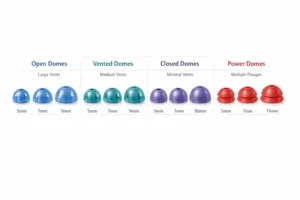
Four main dome types serve different hearing needs and preferences. Each design balances ventilation, sound delivery, and comfort differently.
Open Domes
Open domes feature large vents or openings in their design. These vents allow natural sound to enter your ear canal alongside amplified sound. Open domes work best for mild to moderate high-frequency hearing loss.
The main advantage is natural sound quality. Your own voice sounds more normal with open domes. You also experience less of the “plugged up” sensation that bothers some hearing aid users.
However, open domes provide less amplification for low frequencies. They may also be more prone to feedback in certain situations. People with significant low-frequency hearing loss typically need a different dome type.
Closed Domes
Closed domes have fewer or smaller vents than open domes. Some versions have no vents at all. This design creates a tighter seal in your ear canal.
Closed domes deliver more amplification across all frequencies. They’re particularly effective for moderate to moderately severe hearing loss. The improved seal also reduces feedback and provides better bass response.
The trade-off is less ventilation. Some users initially notice more occlusion effect with closed domes. This makes your own voice sound louder or more echo-like. Most people adapt to this sensation within a few weeks.
Vented Domes
Vented domes fall between open and closed designs. They have strategic venting that balances natural sound with amplification. Vented domes work well for people who need more amplification than open domes provide but want some ventilation.
These domes reduce the occlusion effect while still delivering good amplification. They’re a popular middle-ground option for many hearing aid users. Your hearing care provider can help determine if vented domes suit your specific hearing loss pattern.
Power Domes
Power domes create the tightest seal of all dome types. They’re designed for severe hearing loss or when maximum amplification is needed. Power domes often have a double or triple flange design.
The multiple flanges create a secure seal that prevents sound leakage. This design minimizes feedback even at high amplification levels. Power domes also improve low-frequency response significantly.
These domes work best for people with significant hearing loss across multiple frequencies. The tight seal may feel uncomfortable initially, but proper sizing usually resolves this issue.
Hearing Aid Dome Comparison
Understanding the differences between dome types helps you make an informed choice. This table breaks down the key characteristics of each style.
| Dome Type | Ventilation | Best For | Amplification Level | Occlusion Effect |
|---|---|---|---|---|
| Open | Maximum | Mild to moderate high-frequency loss | Light | Minimal |
| Closed | Minimal to none | Moderate to moderately severe loss | Moderate to high | Moderate |
| Vented | Moderate | Mild to moderate loss across frequencies | Moderate | Low to moderate |
| Power | None | Severe hearing loss | Maximum | Higher initially |
Which Hearing Aid Dome Is Best?
The best hearing aid dome depends on your specific hearing loss pattern and personal preferences. No single dome type works perfectly for everyone. Your hearing care provider considers multiple factors when recommending a dome.
Hearing loss severity plays the primary role in dome selection. People with mild high-frequency loss typically benefit from open domes. Those with moderate across-the-board loss often need closed or vented domes. Severe hearing loss usually requires power domes for adequate amplification.
Your ear canal size and shape also matter significantly. Some ear canals accommodate certain dome designs better than others. A dome that works perfectly for one person might feel uncomfortable or unstable for someone else.
Lifestyle factors influence dome choice too. Active individuals may need domes that stay secure during movement. People who spend time in noisy environments might benefit from domes that provide better low-frequency amplification.

Recent innovations have made dome selection more precise. Phonak’s new EasyGuard OS technology represents a significant advancement in dome performance. This system uses an anti-clogging coating that keeps domes cleaner longer. Field studies show EasyGuard reduces cleaning frequency by up to 55%. This technology helps maintain consistent sound quality between replacements.
Dome Selection Guide by Hearing Loss Type
Choosing the right dome starts with understanding your hearing loss profile. This guide helps match dome types to common hearing loss patterns.
High-Frequency Hearing Loss
High-frequency hearing loss is the most common type. You may struggle to hear consonants, women’s voices, or birds chirping. Low-frequency sounds like thunder or bass notes remain clearer.
Recommended dome: Open or vented domes work best for mild to moderate high-frequency loss. These provide targeted amplification where you need it. Natural low-frequency sounds pass through the vents normally.
Why it works: You don’t need amplification for frequencies you hear well. Venting prevents over-amplification of sounds that are already clear. This approach maintains natural sound quality while improving speech clarity.
Flat or Across-the-Board Hearing Loss
Some people experience similar hearing loss across all frequencies. You might describe sounds as generally quieter rather than specifically muffled or tinny.
Recommended dome: Closed or vented domes typically serve this pattern well. The choice depends on severity. Moderate loss often responds well to vented domes. More significant loss may require fully closed domes.
Why it works: You need consistent amplification across the frequency spectrum. A tighter seal delivers more uniform amplification. This helps maintain natural sound relationships while increasing overall volume.
Low-Frequency Hearing Loss
Low-frequency hearing loss is less common but still occurs. You might hear high-pitched sounds clearly but struggle with deep voices or rumbling sounds.
Recommended dome: Closed or power domes work best. Low frequencies require more power to amplify effectively. A tight seal prevents these frequencies from escaping.
Why it works: Low-frequency sound waves are larger and require more containment. Open venting allows these frequencies to leak out. A secure seal keeps amplified low frequencies directed into your ear canal.
Severe or Profound Hearing Loss
Significant hearing loss across multiple frequencies requires maximum amplification. You may depend heavily on your hearing aids for most communication.
Recommended dome: Power domes with multiple flanges provide the best solution. These create the secure seal needed for high amplification levels without feedback.
Why it works: High amplification increases feedback risk. A tight seal minimizes this issue while maximizing sound delivery. The multiple-flange design also improves stability during movement.
Are Open or Vented Hearing Aid Domes Better?
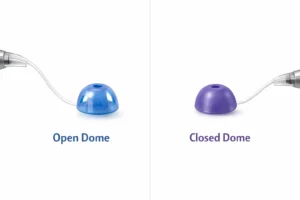
Open and vented domes each offer distinct advantages. The better choice depends on your hearing loss and comfort preferences. Neither option is universally superior.
Open domes excel at maintaining natural sound quality. Your ear canal remains relatively open to ambient sound. This design feels more natural and reduces the plugged sensation. Open domes work exceptionally well for people with good low-frequency hearing.
Vented domes provide a middle ground. They offer more amplification than open domes while maintaining some ventilation. This balance works well for people who need moderate amplification across frequencies. Vented domes also reduce occlusion effect compared to closed domes.
Studies indicate that instant-fit ear domes with appropriate venting significantly improve patient satisfaction. The research emphasizes that proper dome selection based on hearing loss type produces better fitting outcomes. Your hearing care provider can test different options to find your ideal balance.
Consider your priorities when choosing between these options. If natural sound quality matters most and you have mild hearing loss, open domes likely suit you best. If you need more amplification but want to avoid the plugged feeling, vented domes may be ideal.
What Hearing Aid Do Most Audiologists Recommend?
Audiologists don’t recommend hearing aids based solely on dome options. Instead, they consider your complete hearing profile, lifestyle, and technology needs. However, certain hearing aid brands and models offer more dome flexibility.
Phonak hearing aids consistently rank among professional favorites. Their receiver-in-canal models work with all dome types. Phonak also leads in dome innovation with technologies like EasyGuard OS. This system keeps domes cleaner between replacements and maintains sound quality longer.
ReSound devices receive strong professional support for their natural sound processing. Their receiver designs accommodate various dome options. Many audiologists appreciate ReSound’s ability to fine-tune amplification for different dome types.
Oticon hearing aids excel at speech clarity in challenging environments. Their open-fitting philosophy often pairs well with open or vented domes. Audiologists frequently recommend Oticon for people with mild to moderate hearing loss.
Starkey focuses on American-made technology with excellent customization options. Their receiver-in-canal models support all dome types. Starkey’s edge mode technology works effectively regardless of dome choice.
The most important factor isn’t the brand. It’s finding a hearing aid that matches your hearing loss and works with appropriate domes. At American Hearing + Audiology, we fit all major hearing aid brands. This flexibility ensures you get the right device with the optimal dome configuration.
How Hearing Aid Domes Work
Hearing aid domes function as the final link between technology and your ear. Understanding this connection helps you appreciate proper dome selection and care.
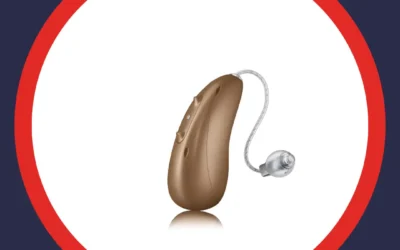
The dome attaches to your hearing aid’s receiver wire. This wire carries amplified sound from the processor behind or in your ear. The dome directs this sound into your ear canal while staying comfortably in place.
Dome design affects acoustic properties significantly. Open domes allow natural sound to mix with amplified frequencies. This creates a more natural listening experience for certain hearing loss patterns. Closed domes contain amplified sound more completely, delivering fuller amplification.
The seal created by your dome affects feedback control. A loose dome may allow amplified sound to escape and re-enter the microphone. This creates the whistling sound known as feedback. A properly fitted dome prevents this issue while maintaining comfort.
Dome size matters as much as dome type. Domes come in multiple sizes to fit different ear canals. Your hearing care provider measures your ear canal to select the right size. A too-small dome won’t seal properly, while a too-large dome causes discomfort.
Modern Hearing Aid Features That Work With All Dome Types
Today’s hearing aid technology delivers excellent performance regardless of dome choice. Advanced features adapt to different dome configurations automatically.
Bluetooth connectivity streams audio directly to your hearing aids. This feature works identically with open, closed, or power domes. You can enjoy phone calls, music, and videos with any dome type.
Rechargeable batteries have become standard across all receiver-in-canal models. Rechargeable hearing aids eliminate the hassle of changing tiny batteries. Your dome choice doesn’t affect battery life or charging functionality.
Artificial intelligence enhances modern hearing aids significantly. AI systems automatically adjust settings based on your environment. These adjustments account for your specific dome type. The technology ensures optimal performance whether you use open or power domes.
Directional microphones help you focus on speech in noisy settings. This feature complements all dome types effectively. The microphone array works independently of dome selection.
Tinnitus masking programs provide relief for ringing in your ears. These programs function equally well with any dome configuration. Your hearing care provider can activate masking features regardless of dome type.
How to Choose the Right Hearing Aid Dome Size
Proper dome sizing ensures comfort and optimal performance. Your hearing care provider measures your ear canal and tests different sizes during your fitting.
What to Expect During Sizing
Your provider will:
- Examine both ear canals (they’re usually different sizes)
- Try small, medium, or large dome options
- Check comfort and retention
- Test for feedback or whistling
- Verify the seal is secure but not painful
Signs You Have the Right Size
A properly fitted dome:
- Slides in comfortably without pressure
- Stays in place when you talk or chew
- Doesn’t cause pain or soreness
- Creates a gentle seal
- You barely notice it’s there
When Size Needs Adjustment
Contact your provider if you experience:
- Domes popping out during normal activities
- Pressure or discomfort after wearing them
- Persistent feedback or whistling
- Soreness in your ear canal
- Difficulty inserting or removing them
Most people need a few days to confirm the right size. Don’t hesitate to request adjustments during this trial period.
When to Replace Your Hearing Aid Domes
Regular dome replacement maintains sound quality and hygiene. Fresh domes prevent performance issues and keep your ears healthy.
Replacement Timeline
Standard schedule: Every 1-3 months depending on:
- Your earwax production level
- Dome type (closed domes may need more frequent changes)
- How often you wear your hearing aids
- Environmental factors like humidity
Replace immediately if you notice:
- Tears or cracks in the material
- Hardened or stiff domes
- Yellowing or darkening color
- Loss of shape or elasticity
- Visible earwax buildup inside
Warning Signs It’s Time for New Domes
Sound quality changes:
- Increased feedback or whistling
- Muffled or unclear sound
- Reduced volume levels
- Static or crackling noises
Physical changes:
- Discomfort that wasn’t there before
- Domes falling out more easily
- Visible wear or damage
- Difficulty cleaning them
We carry replacement domes for all major hearing aid brands. You can order them online or pick them up at any of our locations.
Cleaning and Maintaining Your Hearing Aid Domes
Daily dome care takes just minutes. Proper maintenance extends dome life and maintains sound quality.
Daily Cleaning Routine
Every evening after removing your hearing aids:
- Wipe domes with a soft, dry cloth
- Use a small brush to remove earwax from vents
- Check for visible damage or wear
- Store hearing aids in a dry case with desiccant
- Never use water or cleaning solutions
Weekly Maintenance Tasks
Once a week:
- Inspect domes closely for tears or cracks
- Check wax guards and replace if clogged
- Test for secure attachment to receiver wire
- Look for color changes or hardening
- Keep spare domes on hand for emergencies
New Technology Makes Maintenance Easier
Phonak’s EasyGuard OS technology reduces cleaning needs significantly:
- Anti-clogging coating resists earwax buildup
- 55% less frequent cleaning required
- Maintains sound quality longer
- Extends time between replacements
- Field-tested and proven effective
Storage Tips
Protect your hearing aids and domes:
- Use a proper storage case every night
- Keep cases in cool, dry locations
- Add fresh desiccant packets monthly
- Avoid bathrooms (too humid)
- Never leave in direct sunlight or hot cars

Common Hearing Aid Dome Problems and Solutions
Even properly fitted domes occasionally cause issues. Here’s how to identify and solve common problems quickly.
Feedback or Whistling
What it means: Dome isn’t sealing properly
Immediate fixes:
- Clean domes thoroughly
- Check for tears or damage
- Verify domes are fully seated
- Try pushing them slightly deeper
If whistling continues:
- Dome may be too small
- Material may be worn out
- Contact your provider for new domes
Discomfort or Soreness
What it means: Wrong size or type
What to do:
- Remove hearing aids immediately
- Don’t ignore pain or discomfort
- Call your hearing care provider
- Try a different dome size or style
Never:
- Force domes that feel too large
- Wear painful hearing aids “to get used to it”
- Wait more than a day to seek help
Muffled Sound
Common causes:
- Earwax blocking the dome opening
- Wax buildup inside the receiver
- Dome material breaking down
- Moisture in the receiver tube
Quick solutions:
- Clean domes with a dry brush
- Replace if cleaning doesn’t help
- Check wax guards and change if needed
- Visit your provider if muffling persists
Domes Falling Out
Why it happens:
- Dome size is too small
- Material has lost elasticity
- Ear canal shape requires different type
- Domes are overdue for replacement
Solutions:
- Schedule a fitting appointment
- Try the next size up
- Replace old domes immediately
- Consider vented or power domes for better retention
Occlusion Effect (Echo-Like Voice)
What causes it: Closed domes block your ear canal completely
Normal adaptation:
- Most people adjust within 2 weeks
- Your brain learns to process the sensation
- Becomes less noticeable daily
If it doesn’t improve:
- Ask about vented dome options
- Try open domes if your hearing loss allows
- Discuss with your provider at follow-up
Small Hearing Aids and Dome Options
Modern hearing aids combine discretion with full functionality. Size doesn’t limit your dome choices anymore.
Receiver-in-Canal Models
These achieve the smallest profile:
- Main processor sits behind your ear
- Nearly invisible in most cases
- Thin receiver wire enters ear canal
- Works with all dome types
- Available in multiple colors to match hair
Technology in Small Packages
Miniature hearing aids include:
- Bluetooth connectivity for calls and music
- Rechargeable batteries (no tiny batteries to change)
- Artificial intelligence for automatic adjustments
- Directional microphones for noisy places
- Tinnitus masking programs
Custom Molds vs. Domes
Completely-in-canal devices use custom molds instead of domes:
- Made from impressions of your ear
- Maximum discretion possible
- Less flexibility than dome systems
- Better for stable, long-term hearing loss
Dome-based systems offer advantages:
- Easy adjustments as hearing changes
- Try different types without new molds
- Lower initial cost
- Immediate fitting (no waiting for molds)
Understanding Hearing Loss Types and Dome Selection
Your hearing loss type influences which domes work best. Different causes respond to different dome designs.
Sensorineural Hearing Loss
What it is: Inner ear or nerve damage
Common causes:
- Aging (most common)
- Noise exposure
- Genetics
- Certain medications
Best dome choices:
- Open or vented for mild high-frequency loss
- Closed for moderate across-the-board loss
- Selection depends on frequency pattern
Conductive Hearing Loss
What it is: Problems in outer or middle ear
Common causes:
- Earwax buildup
- Ear infections
- Fluid in middle ear
- Structural issues
Best dome choices:
- Usually requires more amplification
- Closed or power domes work better
- Tighter seal compensates for conduction problems
Mixed Hearing Loss
What it is: Both sensorineural and conductive components
Dome selection:
- More complex fitting process
- Provider considers both types
- Conductive component usually determines minimum seal
- May need to try several options
High-Frequency Loss (Most Common Pattern)
Characteristics:
- Trouble hearing consonants
- Women’s voices harder to understand
- Birds and high-pitched sounds missing
- Bass and low sounds remain clear
Ideal domes:
- Open or vented work exceptionally well
- Natural low-frequency hearing preserved
- Targeted high-frequency amplification
- Most natural sound quality possible
Getting Professional Help With Dome Selection
Professional fitting ensures optimal dome selection. Self-selecting domes often leads to frustration and poor results.
What Happens During Your Fitting
Comprehensive hearing test reveals:
- Exact frequencies affected
- Severity of loss in each ear
- Speech understanding scores
- Best amplification approach
Real-ear measurements verify performance:
- Tiny microphone placed in ear canal
- Measures actual sound reaching eardrum
- Ensures appropriate amplification
- Confirms dome delivers correct levels
Trial periods confirm suitability:
- Test different dome types in real situations
- Try them at home, work, and social settings
- Provider adjusts based on your feedback
- Find the option that works best daily
Follow-Up Appointments Matter
Your dome needs may change:
- Adaptation period reveals preferences
- Seasonal allergies affect ear canals
- Hearing loss can progress over time
- Different situations may need adjustments
Regular check-ins ensure:
- Continued optimal performance
- Comfort remains consistent
- Sound quality stays excellent
- Early detection of any issues
Your Hearing Aid Dome Questions Answered
How often should I replace my hearing aid domes?
Replace domes every 1-3 months depending on wear and earwax production. Change them immediately if you notice:
- Tears or cracks
- Hardening or stiffness
- Sound quality issues
- Color changes
Regular replacement maintains performance and hygiene.
Can I buy hearing aid domes without seeing a provider?
Yes, once you know your correct type and size. You can purchase replacement domes from our online shop or any location.
However, initial dome selection requires professional fitting. Your hearing care provider ensures proper size and type for your hearing loss pattern.
Why does my voice sound strange with closed domes?
This is the occlusion effect. Closed domes block your ear canal more completely, so your voice resonates differently.
Most people adapt within two weeks. If the sensation persists or bothers you significantly, ask your provider about vented or open dome alternatives.
Can I switch between different dome types?
Yes, you can change dome types if your needs change. Reasons to switch include:
- Seasonal allergies affecting ear canals
- Increased earwax production
- Comfort preferences
- Hearing loss changes
Always consult your hearing care provider before changing. Different domes may require amplification adjustments in your hearing aids.
Do I need the same dome type for both ears?
Not necessarily. Many people need different types or sizes for each ear because:
- Hearing loss differs between ears
- Ear canal sizes vary
- Wax production may be different
- Comfort preferences can differ
Your provider fits each ear independently for best results.
Will dome type affect feedback problems?
Yes, dome type impacts feedback significantly:
- Open domes: More prone to whistling
- Closed domes: Better feedback control
- Proper sizing: Matters more than type
- Well-fitted open dome beats poorly fitted closed dome
If you experience persistent feedback, try cleaning your domes first, then contact your provider.
Can I clean my domes with water or alcohol?
Never use liquids on hearing aid domes:
- Water damages the material
- Alcohol breaks down silicone
- Cleaning solutions cause deterioration
Only use:
- Soft, dry cloth
- Dry cleaning brush
- Gentle wiping motions
Replace domes when cleaning no longer restores clarity.
Are expensive domes better than standard ones?
Price doesn’t determine quality. Focus on finding the right type and size for your hearing loss.
Premium features may include:
- Anti-clogging coatings (like Phonak EasyGuard)
- Longer lifespan
- Advanced materials
- Specialized shapes
Standard domes work excellently when properly fitted. Your hearing loss pattern matters more than dome price.
How do I know if my dome size is wrong?
Warning signs include:
- Discomfort or pain
- Domes falling out
- Excessive feedback
- Pressure in ear canal
- Difficulty inserting or removing
- Soreness after wearing
You shouldn’t feel pressure or pain. Domes should stay in place during talking and chewing. Contact your provider if you experience any issues.
Can I use domes from a different hearing aid brand?
Sometimes, but it’s not recommended. Here’s why:
- Receiver wire diameters vary between manufacturers
- Wrong domes risk poor performance
- May damage your hearing aid
- Warranty could be voided
Always use domes designed for your specific hearing aid model. If you’re unsure, check with your provider or bring your hearing aids to any of our locations for verification.
Why Choose American Hearing + Audiology for Your Hearing Aid Needs
We understand that proper dome fitting dramatically improves your hearing aid experience. Our comprehensive approach ensures you get exactly what you need.
Insurance and Affordability
We make hearing aids accessible:
- Accept all insurance plans
- Handle benefit verification for you
- Maximize your coverage automatically
- Flexible payment options available
- Many patients discover coverage they didn’t know existed
Experience You Can Trust
Our team brings expertise:
- 250 years combined experience
- Fit all major hearing aid brands
- Access to every dome type and technology
- Comprehensive evaluation process
- Ongoing support included
Convenient Local Care
We’re in your neighborhood:
- Neighborhood clinics across Kansas City, Lincoln, Omaha, Tulsa, Memphis, and central Arkansas
- Locally owned and operated
- Remote care appointments available
- In-person and virtual options
- Expert care is always nearby
What We Include
Every patient receives:
- Free hearing screening
- Comprehensive evaluation
- Ear canal examination
- Lifestyle needs discussion
- Dome type recommendations
- Ongoing cleaning and adjustments
- Free dome replacements at appointments
Our Promise
We’re in your network, in your neighborhood, and in your corner:
- Make your life easier
- Solve hearing challenges quickly
- Comprehensive evaluation and precision fitting
- Support you every step of the way
Ready to hear better with confidence? Talk with a hearing care provider who listens. Find a clinic near you and schedule your free hearing screening today.