TL;DR Most people wait seven to ten years before doing anything about hearing loss. A free hearing screening at American Hearing + Audiology takes under an hour. National Speech-Language-Hearing Month makes May the right time to close that gap.
For many adults, May arrives like a reminder they have been quietly setting aside. May is National Speech-Language-Hearing Month. That quiet avoidance has a story. This article makes the case for finally answering that reminder.

Seven to Ten Years Is Too Long to Wait
Most people who live with untreated hearing loss waited. Not because they stopped caring, but because the change came so slowly. Hearing loss moves through different degrees and types before most people realize it. National hearing data puts the average wait at seven to ten years. That gap sits between first noticing and finally doing something about it.
Seven to ten years strains a lot of conversations. It is a lot of dinners where you guessed at more than you heard. That time adds up in ways that feel small until they no longer do. Most of those years hide behind explanations most people believe.
The most common ones include:
- Asking people to repeat themselves, especially in groups
- Turning the TV up gradually, week after week
- Feeling worn out after conversations that used to feel easy
- Avoiding crowded restaurants or gatherings you once loved
- Missing words on phone calls and filling in the blanks yourself
Explaining each one away is exactly how seven to ten years pass.
National Speech-Language-Hearing Month creates a specific window to act. The official campaign page runs all month with updated themes and resources. We covered the campaign’s background in a previous piece. It gives you a reason to stop explaining and start knowing. A screening this May takes about an hour and costs you nothing else. Seven to ten years ago, you noticed something. Booking this month turns that noticing into knowing.
The People Around You Noticed Before You Did
There is a version of this story that starts with someone else entirely. A spouse who has repeated the same sentence three times before dinner is over. An adult child who stops calling as often because the phone has become hard. Grandkids whose voices you catch only half of.
This is not about blame. Gradual hearing loss reaches close relationships before it reaches any diagnosis. People closest to you pick up on patterns before you name them. They hold that worry quietly, because the conversation is hard to start.
Acknowledging that something has changed is often the hardest single moment. Most people describe the first appointment as lighter than that moment. The worry tends to outweigh the news. Hearing loss does not stay in one person. It shapes the relationships around you, often quietly and over years. Hearing care is often the most relationship-strengthening appointment a person books. National Speech-Language-Hearing Month offers one more good reason to start that conversation.
Untreated hearing loss tends to affect a few things that matter most:
- Quality of conversation with the people closest to you
- Confidence in social settings, from dinners to work meetings
- Energy at the end of the day after high-effort listening
- Mood and motivation, especially after more isolated weeks
- How often you reach out versus wait for others to initiate
A hearing screening does not fix every relationship, but it starts the real one.

Your Brain Has Been Working Overtime
Hearing is not a function of your ears alone. Your ears collect acoustic information and hand it off. The brain does the actual work of turning sound into meaning. When auditory input drops, the brain compensates by working harder. That extra effort has a name: listening fatigue.
It shows up in ways that feel disconnected from hearing loss itself. You might feel drained after one phone call in a noisy room. Patience tends to run short faster in louder settings. Sleep sometimes feels less restorative after days with heavy listening demands. The brain functions fine, but it works harder than it should.
Treating hearing loss early supports long-term cognitive health. Research continues to explore the link, but the pattern holds across studies. The consistent finding is that listening effort matters, and reducing it matters more. Getting a baseline this May is the most practical thing you can do. National Speech-Language-Hearing Month draws attention to exactly this kind of quiet strain.
Better hearing care can support a few things you might not expect:
- Less mental fatigue after full days of conversation
- Sharper recall of names, details, and directions
- More patience in settings that used to drain you
- Better sleep on nights that follow hard listening days
- More energy left for the things and people that matter most
None of these feel dramatic, but they compound across a week.
The Hearing Aids You Remember Are Not the Ones We Carry
National Speech-Language-Hearing Month makes a good moment to update that picture. If the last hearing aid you pictured belonged to a grandparent, things have changed.
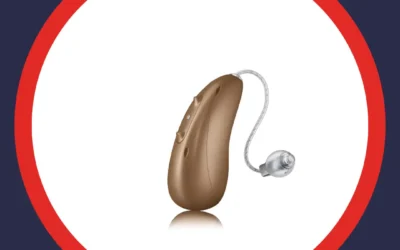
The flagship models from Phonak, ReSound, Starkey, Oticon, and Unitron carry dedicated AI chips. Those chips do real-time speech separation in crowded environments. Bluetooth LE Audio connects hearing aids to phones, TVs, and public Auracast streams. Rechargeable models run all day without opening a battery compartment. Some learn your listening environment and adjust as you move through your day. Others let you fine-tune settings through an app without touching the device.
Cost concerns stop a lot of people from making the appointment. Hearing aid insurance benefits often cover more for most patients than they expect. We help verify your benefits before your visit so no one walks in uncertain.
Some patients compare Sam’s Club hearing aid options with clinic-based care before deciding. A side-by-side look often brings the value of ongoing fitting support into sharp focus.
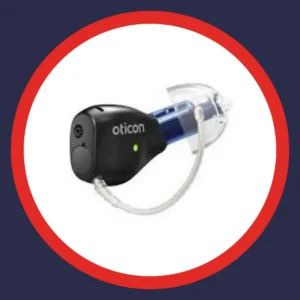
Here is how the technology compares to what most people remember:
|
Feature |
A Generation Ago |
Today’s Top Models |
|
Size |
Large, behind-the-ear only |
Compact styles that fit behind or inside the ear |
|
Battery |
Disposable, replaced weekly |
Rechargeable, lasting all day |
|
Processing |
Basic volume amplification |
AI chips that separate speech from background noise |
|
Connectivity |
None |
Bluetooth, phone streaming, and public Auracast |
|
Control |
Clinic visits only |
Real-time adjustments through a phone app |
|
Insurance |
Often out-of-pocket |
In-network with most major plans |
A 7-day trial makes experiencing everything in that right column easy before committing.
Our Hearing Screening Asks Nothing of You Except an Hour
Most of the barrier lives in the imagination, not the appointment. People picture something clinical and conclusive. The appointment is neither.
A typical screening looks like this:
- Brief conversation about your day-to-day hearing challenges
- Quick visual check of each ear canal
- Listening test with tones and speech in a sound booth
- Plain-language results from your hearing care provider
- Relaxed conversation about next steps, if any
Most patients describe it as simpler than they expected.
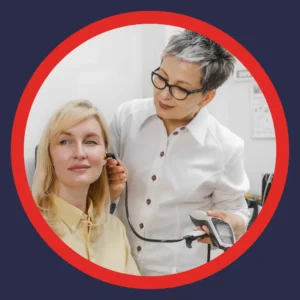
A screening at one of our clinics typically runs under an hour. You sit with a hearing care provider who asks about your hearing first. From there, you put on soft headphones in a quiet sound booth. Tones and speech samples play at different frequencies. You respond, and your provider maps the results.
When it ends, you get a clear picture of where your hearing sits. Healthy results mean you leave knowing. If something shows up, you and your provider talk through what comes next. There is no pressure, no pitch, and no obligation.
Our hearing care services include screenings, fittings, and ongoing support. Bringing a spouse or trusted person is always welcome. Many clinics offer free initial screenings as part of standard care. National Speech-Language-Hearing Month gives you a clear window to stop waiting. Find a clinic near you and schedule a screening this May.
Make National Speech-Language-Hearing Month the Year You Stop Waiting
Seven to ten years is a long time to wait. One appointment this May changes what you know. American Hearing + Audiology offers that appointment as a free hearing screening. Our clinics serve communities from Kansas City to Memphis and beyond.
Local teams own and run every clinic. Our care does not stop at your first visit. We carry five premium hearing aid brands: Phonak, ReSound, Starkey, Oticon, and Unitron. Brand-neutral recommendations come from clinical judgment, not from which brand had a good quarter. Most major insurance plans work with our clinics directly. Hearing aid insurance benefits often cover more than patients expect. We verify your benefits before your visit so you arrive knowing where you stand.
Hearing health also gets a dedicated October moment with Protect Your Hearing Month. Both months remind us that hearing care belongs alongside annual physicals. National Speech-Language-Hearing Month is a natural time to take that first step. We also offer 7-day free trials, remote fine-tuning, and real ear measurement as standard.
Booking a screening with us includes:
- Locally owned care across 15+ clinic locations
- Brand-neutral recommendations across five premium brands
- In-network insurance for most major plans
- A 7-day trial before any purchase commitment
- Remote care and follow-up support after your fitting
All of it starts with one appointment. Find a clinic near you and schedule your screening today. American Hearing + Audiology. In your network. In your neighborhood. In your corner.
Your National Speech-Language-Hearing Month Questions Answered
Is May National Speech-Language-Hearing Month?
Yes, every May is National Speech-Language-Hearing Month. The campaign runs all month, with updated themes and resources each year.
What Is the New Name for Better Hearing and Speech Month?
ASHA renamed it National Speech-Language-Hearing Month, effective in 2024. The new name captures how hearing, speech, and language all support communication.
How Do the 4 P’s of Hearing Loss Describe the Condition?
Progressive, Painless, Permanent, and Preventable make up the 4 P’s. These four words describe how noise-induced hearing loss typically develops over time. A hearing screening gives you the information to act on all four.
Can Hearing Loss Be Restored?
It depends on the type and the underlying cause. Some conductive hearing losses respond well to medical or surgical care. Most age-related hearing loss does not reverse, but hearing aids treat it very effectively. At American Hearing + Audiology, our providers explain your results in plain language.
What Type of Hearing Loss Cannot Be Fixed?
Sensorineural hearing loss usually does not fully reverse. It happens when tiny hair cells in the inner ear stop working. Hearing aids treat sensorineural loss effectively for most patients. American Hearing + Audiology providers walk through your results and outline next steps.
How Does the Whisper Test Work?
The whisper test is a basic screening clinicians use in office settings. Standing behind you, the clinician whispers letters or numbers from a short distance. You repeat what you hear from each ear. It is quick but less precise than a full audiometric screening.
What Are the Emotions of Hearing Loss?
Many people feel frustration, embarrassment, or sadness as hearing changes. Anxiety in social settings is also extremely common. These feelings often ease once people take a clear first step. At American Hearing + Audiology, our first appointments feel low-pressure and judgment-free.