
TL;DR: Hearing and balance share the same inner ear structures. Dizziness and hearing changes often show up together because of that. Sudden, severe dizziness with confusion or slurred speech needs emergency care right away. Milder, recurring dizziness alongside hearing changes is worth a hearing and balance evaluation.
Hearing and balance feel like two separate senses. They actually share one small space in your inner ear. That is why a dizzy spell can arrive with ringing ears. This guide explains that link in plain terms. It also covers when dizziness is an emergency. Start with a hearing evaluation when symptoms overlap. First, learn why the two systems are so connected.
Why Hearing and Balance Share the Same Space
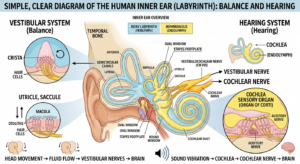
The inner ear holds two systems side by side. One is the cochlea, which handles hearing. The other is the vestibular system, which handles balance.
Here is what ties them together:
- Both sit inside the same inner ear labyrinth
- Both rely on fluid and tiny hair cells
- Damage to one area can affect the other
- One rarely changes without touching the other
That shared home explains the overlap. Hearing and balance often rise and fall together.
How Your Vestibular System Keeps You Steady
The balance side of the inner ear is busy. It senses motion and head position constantly. Your brain uses that data to stay upright.
Here is how it works in brief:
- Three fluid-filled canals sense rotation
- Small organs track gravity and movement
- Signals travel to the brain in real time
- Your eyes and muscles adjust to match
When those signals misfire, dizziness follows. That is why inner ear issues affect balance.
Common Conditions That Affect Both
A few conditions explain most overlapping cases. Each has a very different treatment path. This table shows the typical patterns.
|
Condition |
Typical Symptoms |
|
Meniere’s disease |
Vertigo, ear fullness, ringing, changing hearing |
|
Labyrinthitis |
Sudden vertigo plus sudden hearing loss |
|
Vestibular neuritis |
Sudden vertigo, usually without hearing loss |
|
BPPV |
Brief spinning with certain head movements |
|
Earwax buildup |
Muffled hearing, mild dizziness, ear pressure |
Each condition needs its own evaluation. Guessing from symptoms alone often points people wrong.
What BPPV Is and Why It Matters
BPPV is the most common cause of vertigo. It comes from tiny crystals loose in the inner ear. Certain head movements then trigger a brief spin.
Key things to know about BPPV:
- Spinning often starts when you roll over in bed
- Episodes are short but can feel intense
- It usually does not cause hearing loss
- Simple repositioning moves often resolve it
A provider can confirm BPPV with a quick test. It is common, treatable, and rarely dangerous.

Meniere’s Disease: A Closer Look
Meniere’s disease is a classic overlap condition. It affects hearing and balance at once. Excess inner ear fluid is the suspected cause.
Common features of Meniere’s include the following:
- Vertigo attacks lasting minutes to hours
- A feeling of pressure or fullness in the ear
- Ringing in the ears that comes and goes
- Hearing that fluctuates over time
There is no cure, but the symptoms can be managed. A careful evaluation guides the right plan.
Common Triggers of Dizzy Spells
Certain triggers set off spells for many people. Spotting yours can reduce how often they hit. Patterns often emerge with a little tracking.
Watch for these common triggers:
- Quick head movements or rolling in bed
- Standing up too fast from sitting
- Dehydration or skipped meals
- High salt intake, especially with Meniere’s
- Stress and poor sleep over time
Not every trigger applies to everyone. Your own pattern is what matters most.
Medications That Can Trigger Dizziness
Some medications list dizziness as a side effect. They are a common, overlooked cause. Never stop a medication on your own.
Common culprits include the following:
- Blood pressure and heart medications
- Certain antidepressants and sedatives
- Some antibiotics at higher doses
- Diuretics that shift fluid balance
Ask your doctor before changing anything. A quick review can reveal the trigger.
Types of Dizziness Explained
“Dizzy” means different things to different people. Naming the type helps pinpoint the cause. This table sorts the common kinds.
|
Type |
What It Feels Like |
Often Linked To |
|
Vertigo |
The room spins around you |
Inner ear or vestibular issues |
|
Lightheadedness |
Faint, like you might pass out |
Blood pressure or dehydration |
|
Disequilibrium |
Unsteady on your feet |
Balance, vision, or nerve issues |
Describing your type clearly helps your provider. It narrows the search from the first visit.
Can Hearing Aids Cause Dizziness?
New wearers ask this question often. The short answer is that it can happen. It is usually mild and temporary, though.
What tends to be behind it:
- Your brain adjusts to amplified sound
- New input can feel disorienting for days
- Background sounds suddenly feel close
- The feeling usually fades within weeks
Treating hearing loss may even support balance over time. More research is still underway on that link.
When New Hearing Aids Feel Disorienting
A short adjustment wobble is normal. Lingering dizziness is a different story. The cause is usually simple and fixable.
Ongoing dizziness with aids often traces to these:
- A fit that needs a small adjustment
- A program setting turned too high
- Earwax built up behind the device
- A dome or tip sitting incorrectly
A quick visit usually settles it fast. The devices themselves are rarely the real issue.
When Dizziness Needs Emergency Care First
Not every dizzy spell relates to your ears. Some causes are medical emergencies. Recognizing them matters more than anything else here.
Call 911 if dizziness comes with any of these:
- Sudden confusion or trouble speaking clearly
- Numbness or weakness on one side
- A sudden, severe, unfamiliar headache
- Loss of consciousness or fainting
- Sudden vision loss or double vision
Johns Hopkins Medicine lists these as urgent warning signs. These can signal a stroke, so do not wait.

When a Hearing Care Provider Is the Right First Call
Dizziness without those red flags is different. This is especially true with hearing changes. The inner ear is a reasonable first place to look.
Start with a hearing care provider when you notice these:
- Dizziness alongside ringing or ear fullness
- Muffled or fluctuating hearing with spells
- Recurring vertigo without emergency signs
- Balance issues that come and go
The vestibular system lives in the inner ear. That makes hearing and balance a sensible starting point.
Treatment Paths That Can Help
Treatment depends entirely on the cause. That is why a clear diagnosis comes first. Several proven paths exist once you know it.
Common approaches include the following:
- Repositioning moves for BPPV crystals
- Balance retraining, called vestibular therapy
- Diet and lifestyle changes for Meniere’s
- Hearing aids when hearing loss plays a role
- Referral to an ENT for complex cases
No single fix works for every case. The right path follows the right diagnosis.
When You May Need a Specialist
Some cases need care beyond the ears. A hearing check helps decide that. We coordinate the next step when needed.
Consider a specialist referral in these cases:
- Vertigo that does not improve with care
- Neurological signs alongside dizziness
- A complex mix of overlapping symptoms
- No clear inner ear cause on testing
An ENT or neurologist can dig deeper. Starting with hearing narrows the search first.
Keep a Simple Dizziness Diary
A short diary makes your visit far more useful. It helps a provider spot patterns fast. A week or two of notes is plenty.
Track these details for each spell:
- The date, time, and how long it lasted
- What you were doing when it started
- Any ringing, fullness, or hearing change
- Foods, salt, sleep, or stress that day
Bring the diary to your appointment. You can find a clinic near you to review it together.
What a Hearing and Balance Evaluation Includes
Knowing the steps makes the visit less daunting. The goal is information, not an instant verdict. Most of it is quick and painless.
A typical hearing and balance visit covers the following:
- A talk about symptoms, timing, and triggers
- A look inside both ear canals for wax
- Standard hearing tests across several pitches
- A review of medications that affect balance
The NIDCD notes these tests often overlap. Our hearing care services can start that process.
Dizziness, Balance, and Fall Risk in Older Adults
Balance changes carry higher stakes with age. A fall can mean a serious injury. That makes early answers especially valuable.
Why this matters more for older adults:
- Inner ear changes are more common with age
- Falls become riskier as we get older
- Untreated hearing loss can strain balance
- Small changes are easy to miss at first
Checking hearing and balance early can lower fall risk. A simple evaluation is a smart first step.
Everyday Habits That Support Steady Balance
Daily habits can steady you between visits. None replace a real evaluation. Together, they help you feel more secure.
Habits worth building include the following:
- Rise slowly from bed or a chair
- Keep floors clear of trip hazards
- Stay hydrated throughout the day
- Review dizziness-causing medications with a doctor
- Keep up gentle strength and balance exercise
These support steady footing day to day. Pair them with care for any recurring spells.
Why Early Answers Matter
Waiting rarely makes dizziness easier to solve. Early answers protect your safety and confidence. They also speed you toward the right care.
Early evaluation helps in these ways:
- It rules out urgent causes sooner
- It catches treatable inner ear issues
- It lowers the risk of a fall
- It ends the stress of not knowing
A prompt hearing and balance check is worth it. Peace of mind alone often makes it worthwhile.
What to Do During a Dizzy Spell
A few safe moves help in the moment. They lower your fall risk right away. Use them until the spell fully passes.
During a spell, try these steps:
- Sit or lie down right away
- Hold onto something stable nearby
- Fix your eyes on one still object
- Avoid driving until it fully passes
- Move slowly once it starts to ease
Call for help if a spell feels severe. Note the details afterward for your provider. These steps protect you until hearing and balance care begins. Safety always comes before pushing through a spell.
Ready to Get Answers About Your Symptoms?
Dizziness with hearing changes deserves a real answer. Guessing is not good enough here. A hearing and balance evaluation is a sensible place to start.
A visit with us includes the following:
- A full hearing check at any dizziness visit
- Time to map your whole symptom picture
- Coordination for specialized balance testing
- Insurance benefit checks before you commit
We are locally owned, and we never rush the conversation. Our hearing care providers take dizziness questions seriously. Find a clinic near you if spells and hearing changes overlap. You deserve a clear answer, not another worrying, unexplained spell.
Is dizziness always related to hearing loss?
No, dizziness has many causes beyond the inner ear. Heart issues, medications, and nerve problems can all cause it. At American Hearing, we check for a hearing link first.
Can earwax buildup really cause dizziness?
Yes, wax pressing on the eardrum can affect balance signals. A provider can usually clear it quickly and safely. At American Hearing, wax checks are part of every evaluation.
Should I get a hearing test if I only feel dizzy?
Yes, a hearing test can reveal early inner ear changes. Those changes sometimes appear before hearing loss feels obvious. At American Hearing, our evaluations often catch subtle shifts early.
Is spinning vertigo an emergency?
Not always, but sudden vertigo with red-flag signs is. Confusion, weakness, or slurred speech means calling 911. At American Hearing, we refer urgent cases out right away.
What if my dizziness is unrelated to my ears?
That is a normal, useful outcome to have. Ruling out a hearing link is real progress. At American Hearing, we point you toward the right specialist.