Updated September 2026
TL;DR: Behind the ear hearing aids cover two different styles that most pages treat as one. Most people are fitted with the receiver-in-canal version now. Dedicated noise chips, Auracast broadcast audio and rechargeable batteries all arrived in the last two years, and only one of those three is worth paying a tier for.
Behind the ear hearing aids are the most common style fitted today, and the category is wider than the name suggests. Two quite different devices sit inside it. They suit different ears, and the difference decides comfort and sound quality more than any feature list does. Start there, then work out which of the recent changes are worth your money.
What Behind the Ear Covers
Both styles put the electronics behind your ear. What differs is where the speaker sits, and that is the part that matters.

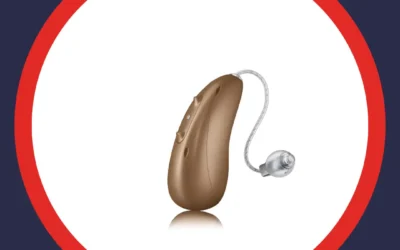
- Receiver-in-canal. The speaker sits in your ear canal on a thin wire. Smaller casing, more natural sound, less occlusion, and the style most people are fitted with today.
- Traditional behind the ear. The speaker sits in the casing and sound travels down a tube to an earmold. Larger, more powerful, and generally the answer for severe and profound loss.
A comparison page listing a receiver-in-canal device under a behind the ear headline is not wrong exactly. It is imprecise in a way that matters if you need real power. Ask your provider which one your audiogram calls for before you look at any model.
What Changed in the Last Two Years
Three things moved, and they did not move equally.
- Dedicated noise processing arrived. Some current models run a second chip whose only job is separating a voice from background babble. This is the real change, and it is the one you can hear.
- Auracast broadcast audio became standard on new platforms. Airports, theaters and places of worship are beginning to broadcast sound straight to hearing devices. Coverage is growing rather than complete. Our guide to understanding Auracast covers where it stands.
- Rechargeable became the default. Every model we fit at current tiers charges rather than taking batteries.
Of those three, only the first varies by tier. Connectivity and rechargeability generally do not, which means paying up for them is usually paying for something you would have had anyway.
The Behind the Ear Hearing Aids We Fit
All four are receiver-in-canal, which is what current premium lines are built as.

| Model | Dedicated noise chip | Battery | Fitting range |
|---|---|---|---|
| Phonak Audéo EON Sphere 90 | ✓ | 38 hours | Mild to severe |
| Phonak Audéo EON R 90 | No | No published figure | Mild to severe |
| ReSound Sensia 9 | ✓ | 24 hours | Mild to severe |
| Starkey Edge AI 24 | No | 51 hours | Mild to severe |
Every one of those is rated IP68 and built for Auracast. The right-hand column is the one to check first, because a fitting range is a hard boundary rather than a preference.
Which Features Are Worth Paying For
Rank them this way and the decision gets simpler.
| Feature | Worth a tier step? |
|---|---|
| Dedicated noise processing | Yes, if noisy rooms are your problem. This is where the money goes |
| Automatic program switching | Yes. More environments recognized means fewer manual adjustments |
| Fine-tuning channels | Somewhat. More channels give your provider control rather than giving you audible gain |
| Bluetooth and streaming | No. Standard across current tiers |
| Auracast readiness | No. Standard on current platforms |
| Rechargeable battery | No. Standard on everything we fit |
Three of those six are already included whichever tier you choose. Knowing that before the appointment is worth more than any feature comparison.
Who Behind the Ear Suits, and Who It Does Not
Style follows anatomy and dexterity more than preference, and this is where it gets decided.

- It suits most people. Receiver-in-canal handles mild through severe loss, sits comfortably, and is easy enough to manage.
- Dexterity trouble points here too, more than to a tiny in-the-ear device, because the casing gives you something to hold.
- It is harder alongside glasses and masks. The space behind the ear gets crowded, and a custom in-the-ear device may be more comfortable.
- It is not the invisible option. If nobody seeing it is the priority, invisible Lyric hearing aids sit deep in the canal instead.
Our page on types of hearing aids lays the full set out side by side if you want to think it through first.
What a Feature List Will Not Tell You
Two things decide how well a behind the ear hearing aid works, and neither appears in a specification.
- The dome or earmold. That small part in your canal shapes sound quality, comfort and feedback more than the tier does, and getting it wrong is the most common reason a good device sounds poor.
- The verification. Real ear measurement is available at many locations, and it confirms what the device is doing in your ear rather than what the fitting software predicted.
If a device sounded thin or whistled the last time you tried one, the odds are strong that one of those two was the reason rather than the hearing aid itself.
Why the Style Question Comes First
People arrive at this topic having already decided which device they want, usually from a list. That order costs them, because style is the one decision an audiogram can rule on and a preference cannot.
The scale of the problem says something about why. About one in three people in the U.S. aged 65 to 74 has hearing loss, and nearly half of those older than 75 have difficulty hearing, according to NIDCD research. That is a very wide range of hearing, and no single style serves all of it.
- Degree of loss decides whether a receiver-in-canal device has enough power, before anything else is discussed.
- Canal shape decides which domes fit, and a poor dome undoes a good device.
- Hands and eyesight decide what you can manage each morning, which determines whether the device stays in use at all.
Those three take about ten minutes to establish in a clinic. They cannot be established from a website, which is why every honest version of this page ends up recommending an appointment rather than a model.
Trying Behind the Ear Hearing Aids at American Hearing + Audiology
Style, tier and dome all get settled in the same appointment, and none of them settles well from a website. Our providers carry five premium brands and recommend across all of them, so what you leave with follows your audiogram and your ears rather than our inventory. Options run from entry level through premium flagship. Using your insurance is often part of the picture, because we are in network with many major plans.
What comes with a fitting here:
- A 7-day trial lets you hear the difference before you commit.
- Real ear measurement is available at many locations.
- Hearing aids fitted with us are unlocked, so they can be serviced elsewhere if you move.
- We can check your benefits before you decide anything.
- Locally owned and operated means the person who fits you is the person you see at follow-up. Meet our team shows you who that is.
Hearing better starts with one conversation. Book a free hearing screening and find a clinic near you.
Behind the Ear Hearing Aids, Answered
What is the difference between behind the ear and receiver-in-canal?
Both keep the electronics behind your ear. In a receiver-in-canal device the speaker sits in your canal on a thin wire, which allows a smaller casing and a more natural sound. A traditional behind the ear device keeps the speaker in the casing and sends sound down a tube, which allows more power for severe and profound loss.
Are behind the ear hearing aids good for severe hearing loss?
The traditional style is generally the answer for severe and profound loss, because it can drive more power. Receiver-in-canal models we fit cover a mild to severe range. Bring your audiogram to a provider at American Hearing + Audiology and they will tell you which side of that line you are on.
Do behind the ear hearing aids work with a phone?
Yes. Current platforms pair directly with iOS and Android for streaming and hands-free calling, and two devices can usually stay connected at once. That is standard rather than a premium feature.
Are behind the ear hearing aids visible?
Less than people expect. Modern receiver-in-canal casings are small and color-matched to hair or skin, and the wire is thin. If total invisibility is the goal, an extended-wear device sitting deep in the canal is the option to look at instead.
Can I try behind the ear hearing aids before buying?
Yes. A 7-day trial lets you hear the difference before you commit, and it applies to every brand and model we carry. If the hearing aids are not right for you, bring them back within the trial and your provider will talk through your options.
Talk with a hearing care provider who listens, and find a clinic near you.