
Updated October 2026
TL;DR: Pick Phonak Audéo EON Sphere if conversation in noisy rooms is your hardest moment and you want Auracast broadcast streaming. Starkey Omega AI+ suits you better if you want the longest charge, a custom in-ear style, a telecoil, or built-in health tracking. Book a hearing test so a provider can confirm the fit against your audiogram before you commit.
You can follow the conversation at home just fine. Then dinner out arrives, the room fills up, and you spend the evening nodding at the parts you missed. That moment is where Phonak vs Starkey hearing aids differ most, and it is a fair place to start choosing. Both Phonak and Starkey sell premium platforms right now, Phonak’s Audéo EON and Starkey’s Omega AI+. The right one depends on your loss, the rooms you struggle in, and the style you will wear every day.

Which Handles Noisy Rooms Better, Phonak or Starkey?
Each brand handles noise with a different design, and the better fit depends on how often you sit in loud rooms. When you weigh Phonak vs Starkey hearing aids for noise, both lean on deep neural networks, Phonak on EON Sphere and Starkey across Omega AI+. A deep neural network is software trained on huge libraries of sound so it can tell a voice from the clatter around it. Where that software runs decides how much of your day it covers.
Phonak gives the job to a dedicated system. The Audéo EON Sphere runs Spheric Speech Clarity 3.0 on the HYPERSONIC chip. Phonak states the feature is exclusive to EON Sphere. The Audéo EON R runs AutoSense OS AI 8.0, which recognizes your sound environment and adjusts automatically. Spheric Speech Clarity stays on EON Sphere only.
Starkey takes the other route. Omega AI+ runs on the G4 Gen AI Neuro Processor, with the neural network built into the chip and several DNNs working together. Its Edge Mode defaults on in the first memory and adds a DNN boost for comfort in noise.
Each option suits a different kind of listening week:
- Phonak EON Sphere: a dedicated speech-from-noise system, plus WindBlock 2.0, which Phonak says cuts wind noise by up to 50 dB.
- Audéo EON R: automatic scene steering through AutoSense OS AI 8.0, a fit for readers whose hardest rooms are quieter.
- Starkey Omega AI+: the neural network sits in the main processor, with Edge Mode on by default for a noise boost.
Neither design helps much if your provider sets the aid wrong for your ears. A provider’s read of how you hear in noise belongs in this decision.
Why Does the Fitting Decide How Much You Hear?
The fitting decides it because both platforms process sound on top of a prescription. That prescription comes from your hearing test. The test maps how loud each pitch must be before you hear it. Fitting software then turns that map into a target for how much each pitch gets amplified.
Software targets assume an average ear canal. No ear canal is average. A small canal makes sound louder at the eardrum, while a larger one makes it softer. Real ear measurement settles that gap. Your provider places a thin probe tube near your eardrum and plays speech-like sound. Then the provider adjusts the aid until what reaches your eardrum matches your prescription.
That step is where a noise feature earns its keep. A DNN can clean up a voice. If the high pitches that carry consonants still arrive too soft, the cleaned-up voice sounds mumbled anyway. Think of it as a clear phone line to a speaker who is whispering.
A wearer feels the fitting in three places on day one:
- Clarity: consonants such as s, f, and th sit in high pitches. Under-amplifying them blurs speech.
- Comfort: over-amplified low pitches make your own voice sound boomy.
- Noise features: speech-in-noise processing works best when the speech it isolates is already audible.
The brand matters. Fitting matters at least as much, and real ear measurement is available at many of our locations.
How Do Battery Life and Charging Compare?
Starkey publishes the longer charge. Omega AI+ RIC RT is rated up to 51 hours without streaming and up to 45 hours with streaming. Phonak rates the Audéo EON at up to 38 hours. It also notes that streaming, hearing loss, and the features in use all change that figure.
Part of the gap comes from workload. A dedicated speech-in-noise system draws power. Phonak says EON uses 37% less power than the previous Sphere generation. On the Starkey side, custom styles and mRIC run about 42 hours on a charge, according to Starkey.
| Model | Rated battery life | What changes it |
|---|---|---|
| Phonak Audéo EON | Up to 38 hours | Streaming, degree of loss, features in use |
| Starkey Omega AI+ RIC RT | Up to 51 hours, or 45 with streaming | Streaming time |
| Starkey Omega AI+ custom and mRIC | About 42 hours | Style and use |
For most wearers, either one covers a full waking day. Battery is rarely the deciding factor between Phonak vs Starkey hearing aids, unless you stream for hours or tend to forget the charger.

Which Styles Can You Choose From?
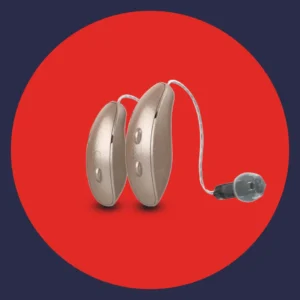
Style is where Phonak vs Starkey hearing aids split most visibly. Starkey offers the wider range in this comparison, including custom in-ear options. Phonak’s Audéo EON is a receiver-in-canal family. A small case sits behind the ear, and a thin wire carries sound to a speaker in the canal.
Starkey builds Omega AI+ in three groups of styles:
- Receiver in canal: mRIC R, RIC RT, and RIC 312, for most degrees of loss.
- Custom in-ear: CIC, ITC R, and ITE R, made from an impression of your ear.
- Nearly invisible: IIC NW, CIC NW, and CIC R NW, which sit deep in the canal.
Custom hearing aids suit readers who wear glasses or masks. They also suit anyone who would rather have nothing behind the ear. Phonak counters with a smaller case. The company says EON Sphere is 25% smaller and 20% lighter than the previous Sphere generation.
Both families carry an IP68 rating for dust and water resistance. Phonak’s EON range fits mild to profound loss, with the UP receiver reaching moderate to profound. Your provider matches the style to your ear canal and the degree of your loss, both of which show up in your hearing test.
What Do You Get for Streaming, Calls, and Health Tracking?
Phonak covers more streaming standards, with Bluetooth Classic, LE Audio, and Auracast on one device. Starkey puts more into health features. Your daily habits decide which side of that trade matters more.
| Feature | Phonak Audéo EON | Starkey Omega AI+ |
|---|---|---|
| Streaming and apps | Bluetooth Classic, LE Audio, Auracast, myPhonak app | My Starkey app, StarLink 2.0 accessories |
| Classroom and meeting microphones | RogerDirect | StarLink 2.0 and Edge accessories |
| Standout listening extra | Auracast broadcast streaming | Telecoil on RIC RT |
| Health tracking | ✔ with myPhonak app | ✔ with built-in sensors |
| CROS for single-sided loss | ✔ CROS EON R | ✔ CROS system |
| Water and dust rating | IP68 | IP68 |
Auracast lets a hearing aid tune into public broadcasts in airports, gyms, and theaters that adopt it. A telecoil picks up the hearing loops many churches and theaters already use. If you sit in a looped sanctuary every Sunday, the telecoil on the Omega AI+ RIC RT is a practical advantage today.
Starkey also lists left-behind alerts and sleep quality tracking in the My Starkey app. It calls both an industry first. Omega AI+ carries Starkey’s tinnitus technology too. Readers who want one device for hearing, wellness, and tinnitus support will lean Starkey.
How Do the Technology Levels Differ?
Each brand sells its platform at more than one technology level. The level changes how much automatic help you get in hard listening situations. Phonak offers Audéo EON at levels including 90 and 70. Starkey offers Omega AI+ at 24, 20, and 16.
Higher levels add automatic adjustments for more listening environments. A wearer who spends evenings in restaurants and weekends at family gatherings gets more from those adjustments. Someone who mostly talks one-on-one at home gets less. The levels pair up roughly like this:
- Top level, Phonak 90 and Starkey 24: the top of each range, built for the widest mix of busy, changing environments.
- Second level, Phonak 70 and Starkey 20: a step down, still well suited to an active week with some group conversation.
- Starkey 16: for quieter routines with fewer demanding rooms.
Our guide to choosing a technology level walks through how to match a level to your week. Your provider can map your typical week against each level before you choose.
What Drives the Cost of Phonak vs Starkey Hearing Aids?
Three things drive cost: the technology level, the style, and what your hearing benefit covers. Within the same family, a premium level costs more than an entry level. A custom shell adds the step of an ear impression.
Your benefit network shapes the rest. A plan that includes hearing aids usually works through a network, such as TruHearing, Nations Hearing, or UnitedHealthcare Hearing. The network sets which providers you can see and what portion of the device your plan covers. It does not tell you which aid fits your loss. That part still comes from your hearing test.
Settle cost in this order to avoid guesswork:
- Verify your benefit first: a plan that covers hearing aids changes the decision before you compare models.
- Pick the level by your week: paying for automatic help you will not use adds cost without benefit.
- Choose the style by your ear: the audiogram and your ear canal narrow the field before preference does.
We are in network with many major plans. Our guide to hearing aid insurance benefits explains how coverage usually works. Cost comes up in every first appointment, and your provider will go through your options before you decide anything.
Phonak vs Starkey Hearing Aids: Which Fits You?
Choosing between Phonak vs Starkey hearing aids comes down to the moment you most want to fix. Both are premium platforms. Neither is best for everyone.
Phonak Audéo EON is best if:
- Noisy rooms are your biggest struggle, since EON Sphere runs a dedicated speech-in-noise system.
- Broadcast streaming matters to you, with Auracast and LE Audio built in.
- Classroom or meeting microphones are part of your week, through RogerDirect.
Starkey Omega AI+ is best if:
- You want the longest charge, up to 51 hours on the RIC RT without streaming.
- A custom or nearly invisible style appeals to you, from CIC to IIC.
- Hearing loops or health tracking matter, with a telecoil on the RIC RT and built-in sensors.
Wearing the aid matters as much as choosing it. Fewer than 1 in 3 adults 70 and older who could benefit from hearing aids has ever used them, according to the NIDCD. The device that fits your ears and your routine is the one that leaves the charger every morning.

Try Both Brands With a Provider Who Listens
Hearing better starts with one conversation. At American Hearing + Audiology, we carry Phonak, Starkey, ReSound, Oticon, and Unitron. That means our recommendation follows your hearing test, not a single-brand catalog. Your provider weighs Phonak vs Starkey hearing aids against your audiogram and your listening week, then fits the one that suits you.
Every visit comes with the same backing:
- Locally owned and operated, with hands-on care at testing, fitting, and follow-up.
- Options across price tiers, from entry level through premium.
- In-network with many major plans, and we check your benefits before you decide anything.
- Real ear measurement at many locations, so your fitting matches your prescription at the eardrum.
- A 7-day trial, so you hear the difference in your own restaurants and meetings before you commit.
- Unlocked hearing aids, so your devices are not tied to one seller.
Hearing care here stays in your network, in your neighborhood, and in your corner. Find a clinic near you and start with a free hearing screening.
Phonak vs Starkey Hearing Aids: Common Questions
Can I Try Phonak or Starkey Hearing Aids Before Buying?
Yes. At American Hearing + Audiology, every brand and model we carry comes with a 7-day trial that includes the hearing aids and the charger. If the hearing aids are not right for you, bring them back within the trial. Your provider will talk through your options.
Do Phonak and Starkey Make Hearing Aids for Hearing in One Ear Only?
Both do. Phonak pairs the EON R with CROS EON R. Starkey offers a CROS system with Omega AI+. A CROS device picks up sound on the side with little or no usable hearing and sends it to the better ear. Our guide on what a CROS hearing aid is explains who it helps.
Can I Use an HSA or FSA for Phonak or Starkey Hearing Aids?
We accept HSA and FSA cards. Hearing aids, batteries, and repairs are generally eligible expenses, your plan administrator has the final say, and we can give you an itemized receipt for your records.
What Happens if My Hearing Aids Need a Repair?
Your provider checks the device and starts the repair. American Hearing + Audiology offers loaner hearing aids while yours are out, so you keep hearing in the meantime. Our providers also troubleshoot Bluetooth pairing when your phone and aids stop talking.
Can American Hearing + Audiology Adjust Hearing Aids I Bought Elsewhere?
Our providers adjust and refit hearing aids purchased from American Hearing + Audiology. For devices bought elsewhere, the original provider handles adjustments. You are still welcome to find a clinic near you for a free hearing screening.