TL;DR: A hearing aid warranty covers manufacturer defects. It sometimes covers loss or damage too, for a set number of years. Length alone doesn’t guarantee good care afterward. Ongoing service, not just warranty length, determines how well your hearing aids stay maintained.
Shopping for hearing aids means comparing more than the devices. A hearing aid warranty varies a lot between providers. Warranty length is often the headline number clinics lead with. Some push a longer term as the main selling point. The part that matters most happens after that term ends. This guide breaks down what warranties cover and miss. It also shows why ongoing care changes the math.
What a Standard Hearing Aid Warranty Covers
Most manufacturer warranties split into two separate parts. Knowing the difference helps you compare offers well. One part protects the device, the other your investment.
A standard hearing aid warranty usually covers the following:
- Defects in materials or workmanship
- Repairs for normal-use malfunctions
- A set coverage term, often one to three years
- Manufacturer parts and labor for that term
Routine upkeep is a different matter entirely. That gap is where many shoppers get surprised.
Manufacturer Defect vs Loss and Damage
These two coverages get confused constantly. They solve very different problems. This table lays them side by side.
|
Feature |
Manufacturer Repair |
Loss and Damage |
|
What it covers |
Defects and malfunctions |
Drops, moisture, lost aids |
|
How it works |
Repair or replace parts |
Usually one replacement |
|
Included by default |
Yes, with the device |
Often a separate policy |
|
Typical term |
One to three years |
Set term, one claim |
Never assume a repair warranty replaces a lost device. That assumption leads to an unpleasant surprise.
Loss and Damage Coverage Explained
Loss and damage is its own policy. It is not part of the basic repair warranty. Reading these terms early prevents headaches later.
Key points to understand include the following:
- It covers accidental drops and moisture
- It usually allows one replacement only
- A service fee may apply to a claim
- A second loss is often not covered
Ask exactly how many replacements you get. One claim is the common industry standard.
Why Warranty Length Alone Misses the Point
A longer warranty sounds better on paper. Coverage terms still vary widely between providers. The number of years tells only part of the story.
Look past the headline number at these details:
- What the warranty actually covers
- How the claims process really works
- Who handles the repairs and turnaround
- What upkeep sits outside the warranty
This consumer guidance notes extended coverage often carries limits. Read the fine print before the length impresses you.
How Warranty Length Can Distract From Care
Some clinics make the warranty the whole pitch. A bigger number feels reassuring at purchase. It says little about the years that follow.
Watch for these sales patterns:
- The warranty length leads every conversation
- Little is said about routine visits
- Ongoing care gets glossed over
- Year two and three go unmentioned
A long hearing aid warranty can still hide thin service. Ask what happens after the term ends.
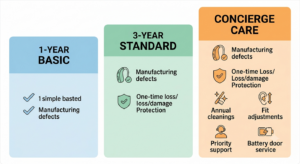
1-Year vs 3-Year vs Concierge Care
Here is how coverage typically compares across options. This table adds an ongoing concierge plan too. Notice what a warranty never includes.
|
Coverage Type |
1-Year Warranty |
3-Year Warranty |
Concierge Care |
|
Manufacturer defect repair |
Included |
Included |
Included |
|
Loss and damage replacement |
Rarely |
Often once |
Often included |
|
Routine cleanings and checks |
Not included |
Not included |
Included |
|
Programming adjustments |
Extra cost |
Extra cost |
Included |
|
Annual hearing tests |
Not included |
Not included |
Included |
|
Loaner aids during repair |
Rarely |
Sometimes |
Often |
A 3-year warranty beats a 1-year one on paper. Neither covers the visits that keep aids working well.
The Coverage Gap: Devices Outlast Warranties
Here is a detail most pitches skip entirely. Hearing aids usually outlive their warranties. That gap deserves your attention up front.
Consider these numbers side by side:
- Devices often last roughly three to seven years
- Warranties usually run one to three years
- That leaves years without repair coverage
- Ongoing care matters most in those later years
Published research puts device lifespan at three to seven years. Plan for the years after the warranty ends.
What to Check on Your Hearing Aid Warranty
The paperwork holds the real answers. A quick read prevents later confusion. Keep your documents somewhere safe.
Check these details on the paperwork:
- The exact coverage term in writing
- Whether loss and damage is included
- The number of allowed replacements
- Any service fees tied to a claim
Snap a photo of the paperwork too. That copy helps if questions arise later.

Are Extended Warranties Worth It?
Extended coverage can help, with caveats. The value depends on the specific terms. Read them as carefully as the base warranty.
Weigh an extended warranty against these questions:
- Does it cover loss, damage, or only repairs?
- How many claims does it actually allow?
- Are routine visits included or extra?
- Who services the device under the plan?
An extended warranty still protects the device only. It rarely covers the ongoing tuning you need.
Daily Habits That Reduce Repairs
Good habits mean fewer warranty claims. They also keep aids sounding their best. Small routines protect your investment.
Protect your devices with these habits:
- Wipe them dry every single night
- Store them in a dry case or charger
- Keep them away from water and heat
- Change wax filters on a schedule
Fewer repairs means less reliance on any warranty. Daily care is easier than a claim.
Repair or Replace: Reading the Signs
Not every problem needs a new device. Many issues are simple, quick repairs. Knowing the signs saves money and stress.
A repair often makes sense with these signs:
- A single part fails under normal use
- Sound returns after a quick service
- The fit needs only a small adjustment
- The device is still fairly recent
A replacement makes sense for older, failing aids. Your provider helps you weigh the call.
When It Might Be Time to Upgrade
Sometimes new aids beat another repair. Age, cost, and technology all factor in. A provider helps you decide clearly.
Consider upgrading when you notice these:
- Repairs are getting frequent or costly
- The aids no longer match your hearing
- Newer features would genuinely help you
- The device is past its expected lifespan
An upgrade is a choice, never a push. We lay out the trade-offs plainly.
Warranty vs Insurance: Not the Same Thing
People often mix these two up. They cover different situations entirely. Understanding both prevents costly assumptions.
Here is the basic distinction:
- A warranty covers defects from the maker
- Loss and damage covers accidents, separately
- Health insurance may help with the purchase
- None of these replace routine, ongoing care
We can verify your hearing aid insurance benefits too. That keeps warranty and coverage questions clear.

What Makes Ongoing Concierge Care Different
A warranty is a one-time protection at purchase. Concierge care is an ongoing relationship instead. The two solve genuinely different problems.
Our Concierge Service Plan wraps in the following:
- Unlimited office visits for check-ins
- Routine cleanings and programming adjustments
- Annual hearing tests to track changes
- Real ear measurement to confirm the fit
- Loaner aids available during repairs
- Coverage on wax traps, domes, and irrigations
A warranty protects the device itself. Ongoing care protects how well you hear daily. Hearing shifts gradually, even within one year.
Warranty vs Service Plan at a Glance
These two work together, not against each other. One guards the device, one guards your hearing. This table shows the split clearly.
|
Question |
Warranty |
Service Plan |
|
Covers defects |
Yes |
Not its focus |
|
Covers cleanings |
No |
Yes |
|
Covers adjustments |
No |
Yes |
|
Covers annual tests |
No |
Yes |
|
Runs how long |
Fixed term |
Ongoing |
Together they cover the full picture. Alone, each one leaves a real gap.
Questions to Ask About Any Hearing Aid Warranty
A few direct questions reveal the real coverage. Ask them before you sign anything. Clear answers signal an honest provider.
Ask every provider these questions:
- What exactly does this hearing aid warranty cover?
- Is loss and damage included or separate?
- How many replacements does the policy allow?
- What upkeep falls outside the warranty?
- Who handles repairs, and how long do they take?
Straightforward answers are a strong sign. Vague replies are worth noting too.
How We Handle Warranty Support
Warranty terms should be clear from day one. We walk through them before you buy. No surprises show up later that way.
Working with us on warranties means the following:
- Plain-language review of every warranty term
- Manufacturer warranty support on all devices
- Brand-neutral comparison across five brands
- Concierge care available on top of coverage
We are locally owned, so the guidance stays honest. Plan details can vary slightly by clinic.
Warranty Support After the First Few Years
The later years are where care matters most. Warranties often lapse right in that window. That is when a service plan earns its keep.
Later-year support should include the following:
- Continued cleanings and tune-ups
- Help sourcing out-of-warranty repairs
- Honest guidance on when to upgrade
- Advice built on your needs, not a sale
Find a clinic near you to plan for those later years. A hearing aid warranty is only the beginning.
Common Hearing Aid Warranty Myths
A few myths lead to costly assumptions. Clearing them up helps you choose well. Facts beat sales talk every time.
Myths worth dropping include the following:
- Myth: a longer warranty always means better care
- Myth: a warranty replaces a lost device automatically
- Myth: warranties cover routine cleanings
- Myth: all brands offer identical terms
None of these hold up under a close read. Check the actual terms instead.
Getting the Most From Your Coverage
A little organization stretches coverage further. Small steps prevent lapsed claims. Stay ahead of the key dates.
Make the most of coverage with these steps:
- Note your warranty end date on a calendar
- Keep receipts and paperwork together
- Report issues before the term expires
- Book a checkup near the coverage deadline
A quick annual review keeps everything current. That habit prevents unwelcome surprises later.
Ready to Compare Your Options in Person?
Warranty terms matter, but they are only part of the picture. The right plan depends on your devices and habits. A quick conversation clears up the details fast.
A visit with us includes the following:
- A plain walk-through of warranty coverage
- Brand-neutral advice across five premium brands
- Concierge options explained without pressure
- Insurance benefit checks before you commit
Our hearing care services include full warranty support. Find a clinic near you to compare options side by side. We keep the terms simple and clear.
Is a 3-year warranty always better than a 1-year warranty?
Not automatically, since coverage details matter more than years. At American Hearing, our team reviews exactly what each warranty covers. That review happens before you ever decide.
Does a hearing aid warranty cover routine cleanings?
No, most warranties cover defects, not routine maintenance visits. At American Hearing, our Concierge Service Plan covers those ongoing visits. A warranty and a service plan solve different problems.
Can I add loss and damage coverage later?
Sometimes, though it is easiest to add at purchase. Options narrow once the device is older. At American Hearing, we review your choices honestly.
Do all hearing aid brands offer the same warranty?
No, warranty length varies by manufacturer and device tier. At American Hearing, we carry five brands to compare. We can line up their warranty terms side by side.
Is concierge care worth it while still under warranty?
Yes, since a warranty and ongoing care differ completely. At American Hearing, our Concierge Service Plan covers routine checkups. Those visits fall outside typical warranty terms anyway.