Updated September 2026
TL;DR: The best hearing aids for elderly people are rarely the ones with the longest spec sheet. Dexterity, vision, ear anatomy and how often someone will wear them decide more than processing power. Rechargeable devices and a provider who does the handling training matter more than a tier number.
Choosing hearing aids for elderly people is a different problem from choosing them at fifty, and most comparison pages miss why it is different. The technology question barely changes. What changes is whether the person can put the device in reliably, keep it clean, hear the difference well enough to keep wearing it, and get back to someone who can adjust it. Get those right and a mid-tier device outperforms a flagship that lives in a drawer.
What Changes When You Are Older
Four practical things shift the recommendation, and none of them appears in a spec comparison.

- Dexterity. Arthritis, tremor and reduced fine motor control make tiny batteries and small controls a daily frustration. This is the single most common reason a device stops being worn.
- Vision. Color-coded left and right markings, small app text and fiddly charger contacts all assume eyesight that may not be there.
- Ear anatomy. Canals change shape with age, and skin gets thinner and more sensitive. Comfort problems that would be minor at fifty become deal-breakers.
- Who else is involved. A spouse or adult child is often part of the routine, and the device needs to be manageable by two people rather than one.
Bring the person who helps with daily routines to the fitting appointment. It changes the recommendation more often than any test result does.
What the Research Shows About Hearing and the Brain
You will see hearing aids described as dementia prevention. The evidence is more specific than that, and the specifics are worth having.
A three-year randomized trial found that higher-risk participants who received the hearing intervention had half the rate of cognitive change of the control group, according to Johns Hopkins research. The same trial found no such benefit among healthy community volunteers, whose cognitive change was minimal either way.
So the honest version is narrower than the headline. Treating hearing loss appears to matter most for people who already carry other risk factors, and it is not a preventive measure for everyone. That is still a strong reason to act, and it is not a promise.
The Hearing Aids We Fit for Older Adults
These are the current lines from the brands we carry, with the features that matter at this stage rather than the ones that market well.
| Model | Rechargeable | Battery | Best if |
|---|---|---|---|
| Phonak Audéo EON Sphere 90 | ✓ | 38 hours | Family gatherings and restaurants are the problem |
| Phonak Audéo EON R 90 | ✓ | No published figure | Hearing is poor on one side only |
| ReSound Sensia 9 | ✓ | 24 hours | A smaller, lighter device matters |
| Starkey Edge AI 24 | ✓ | 51 hours | Longest run time, plus activity tracking |
Every model above is rechargeable, which is the most useful line in the table. Nobody fumbles a size 10 battery into a device at seven in the morning by choice.
Features That Matter More With Age
For hearing aids for elderly people, rank the list this way rather than by tier, and the shortlist gets much shorter.
| Feature | Why it matters here |
|---|---|
| Rechargeable battery | No tiny doors, no fiddly cells, no monthly trip for batteries |
| Magnetic charging case | The device seats itself, so precise placement is not required |
| Automatic program switching | No buttons to remember and no settings to get wrong |
| Direct television streaming | Ends the volume argument in the living room, which is often the first thing families notice |
| Long battery life | A forgotten charge should not mean a silent afternoon |
| IP68 rating | Sweat, rain and a dropped device in the bathroom are all survivable |
Notice that only one row on that table is about sound quality. That is deliberate, and it reflects what decides whether someone keeps wearing them.
Which Style Suits Whom
Among hearing aids for elderly people, style is where dexterity and vision do most of their work.
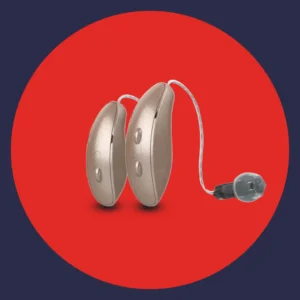
- Receiver-in-canal. The default for most people. Rechargeable, comfortable, easy enough to handle, and it covers a mild to severe fitting range.
- Custom in-the-ear. Worth considering when glasses and masks make a device behind the ear crowded. The Oticon Zeal line is where we focus here.
- Extended wear. Invisible Lyric hearing aids sit deep in the canal and stay in, so there is no daily handling at all. That suits someone for whom the handling is the whole barrier.
Our page on types of hearing aids covers the full set, and top 6 hearing aids for seniors goes further on fit and handling.
What Gets Missed With Older Patients
Four things our providers see repeatedly, and all four are fixable.
- Nobody was taught the handling properly. Insertion, cleaning and charging need showing, not telling, and often twice.
- Earwax was the real problem. It is common, it worsens with age, and it can be mistaken for a failing device.
- The follow-up never happened. First fit is never final, and older patients are the group most likely to accept a poor fitting rather than complain about it.
- The device was fitted and never reviewed. Hearing changes. A device programmed four years ago is programmed to a person who no longer exists.
If someone in your family has hearing aids they no longer wear, the reason is usually on that list rather than in the device.
Signs It Is Time to Look at Hearing Aids for Elderly People
Hearing loss arrives slowly enough that the person living with it is often the last to notice. Families usually see it first, and these are the signs they describe.
- The television is loud enough to bother everyone else. This is almost always the first one.
- Phone calls have become short. A phone strips out visual cues and compresses the sound, so it fails earlier than face-to-face conversation.
- Group settings get avoided. Skipping the restaurant or leaving the family dinner early is often mistaken for tiredness or mood.
- Answers do not match questions. Not confusion. A misheard consonant, filled in with a reasonable guess.
- Doorbells, timers and alarms go unanswered. High-frequency sounds go first, and most household alerts are high frequency.
Any two of those together are worth a screening. It is free at all our locations, it takes very little time, and a clear result is a good outcome rather than a wasted trip.
Choosing Hearing Aids for Elderly People with American Hearing + Audiology
The fitting is what makes this work, and the handling training is part of the fitting rather than an extra. Our providers carry five premium brands and recommend across all of them, so the recommendation follows dexterity, hearing and daily routine rather than our inventory. Options run from entry level through premium flagship. Using your insurance is often part of the picture, because we are in network with many major plans.
What that looks like:
- A 7-day trial lets you hear the difference before you commit, at home rather than in a booth.
- Real ear measurement is available at many locations, so the fitting is verified rather than estimated.
- Hearing aids fitted with us are unlocked, so they can be serviced elsewhere if you move closer to family.
- We can check your benefits before you decide anything.
- Locally owned and operated means the person who fits you is the person you see at follow-up. Meet our team shows you who that is.
Bring whoever helps at home. Book a free hearing screening and find a clinic near you.
Hearing Aids for Elderly People, Answered
What are the easiest hearing aids for an older person to use?
Rechargeable receiver-in-canal devices with a magnetic charging case and automatic program switching, because none of those require fine motor control or remembering a setting. Our providers at American Hearing + Audiology will also run the handling training with whoever helps at home, which matters more than the model choice.
Do hearing aids help prevent dementia?
The evidence is narrower than the headlines. A three-year randomized trial found half the rate of cognitive change among higher-risk participants who received a hearing intervention, and no such benefit among healthy volunteers. Treating hearing loss is worth doing on its own merits, and it is not a guarantee about dementia.
Are rechargeable hearing aids better for seniors?
For most people, yes. Disposable batteries mean small doors, small cells and regular replacement, and that is the daily friction most likely to end with the device in a drawer. Every model we fit at the current tiers is rechargeable.
What if an older relative refuses to wear hearing aids?
Ask what specifically is wrong before assuming it is stubbornness. Discomfort, whistling, a poor fitting and untreated earwax are all common and all fixable, and a follow-up appointment usually settles it. At American Hearing + Audiology adjustments after the first fit are expected rather than exceptional.
How often should an older adult have their hearing checked?
Annually is a reasonable rhythm once you are wearing hearing aids, because hearing changes and a device programmed to an older audiogram gradually stops matching. A free hearing screening is available at all our locations.
Talk with a hearing care provider who listens, and find a clinic near you.