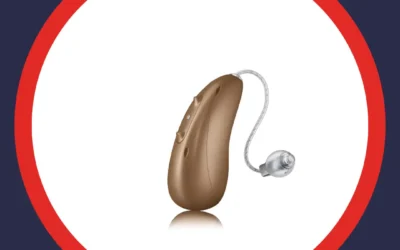
TL;DR: When a parent won’t wear hearing aids they already own, the problem is usually the settings, the fit, or the handling, and all three are adjustable. The first fitting is a starting point rather than a finished setting. So, the aids in the drawer are often two appointments away from working. Find out who fitted them, then get that provider to make the changes.
She spent the money and wore them for a week. Now they live in a drawer in the kitchen, and you are back to repeating yourself at dinner. A parent who won’t wear hearing aids is rarely being stubborn, and the reasons they give are usually literal. Before you push again, it helps to know that almost everything they are complaining about is adjustable. Convincing a parent to get tested was the harder half of this.

Why She Won’t Wear Hearing Aids, in Her Words
Listen to each complaint literally rather than treating it as resistance. What sounds like refusal is usually a description of a solvable problem.
| What she says | What it usually means | What changes it |
|---|---|---|
| “Everything is too loud at once” | Gain is set too high across the board for a new wearer | A gain adjustment, walked up over visits |
| “I can hear the dishes, not you” | High frequency amplification without enough speech focus | Reprogramming, and a program for noisy rooms |
| “They hurt after a few hours” | A dome or mold that does not fit the ear | A size or style change, checked in person |
| “I can’t get the batteries in” | Dexterity and a device chosen without it in mind | A rechargeable option or a handling lesson |
| “There’s whistling” | Feedback from a poor seal | A fit check and a feedback-control adjustment |
| “It’s not worth the bother” | Several of the above, stacked, and nobody asked | A follow-up appointment with the list above |
None of those rows is a reason to give up on the aids. Each one is an appointment.
The Part Nobody Explained at the Fitting
A first fitting is not the final setting, and the gap between those two things is where most hearing aids get abandoned. When a provider programs hearing aids, the software calculates a prescription from the audiogram, then almost always starts the wearer below that prescription on purpose. Full prescription on day one sounds harsh to someone whose brain has not heard those frequencies in years. The plan is to walk the gain up across follow-up visits as the brain re-learns the sounds.
Nobody enjoys that first week. In a randomized trial of new adult hearing aid users, 78 percent did not prefer a verified fit that matched prescription more closely at high frequencies. They chose the softer manufacturer setting instead. Comfort on day one and correctness are two different targets, which is exactly why a fitting moves over the first months rather than staying where it started.
So when your mother says the aids are wrong, she may be describing a setting that was always meant to be temporary. If nobody booked her follow-up, or she canceled it because the aids were annoying her, she is wearing the starting point and judging it as the finished product. Our guide to why the fitting matters walks through what a proper fitting appointment involves.

What a Follow-Up Visit Can Change
When a parent won’t wear hearing aids, a follow-up is the appointment that changes it. This is not a sales visit. That is worth saying out loud to a parent who suspects otherwise. These are the adjustments a provider makes at one.
- Gain by frequency band, so speech comes up without the refrigerator coming up with it.
- Separate programs for church, restaurants, or the car, which the wearer switches rather than tolerating one setting everywhere.
- Dome or earmold size, since the part that hurts after three hours is usually the cheapest part to change.
- Feedback settings, which stop the whistling that makes people self-conscious in public.
- Verification with real ear measurement, available at many locations, measures what the aids deliver rather than what the software predicted.
- A handling lesson, repeated as many times as it takes, on batteries, charging, and insertion.
Any one of those can be the difference between daily wear and a drawer. Ask for all six.
Who to Take Them Back To
Go back to the provider who fitted them first, because that practice holds the programming software, the fitting session data, and usually the warranty relationship. A patient who won’t wear hearing aids she already paid for is exactly who that practice should want back in the chair. Call and say the aids are not being worn, list the complaints from the table above, and ask for a follow-up and refitting appointment. A good provider will want that call, since an abandoned pair of hearing aids is a failure for them too.
If they cannot fit her in, will not reprogram without a charge she considers unreasonable, or brush off the complaints, that is useful information rather than a dead end. At American Hearing + Audiology we adjust and refit hearing aids purchased from us, so a device bought elsewhere goes back to its own provider first. What we can offer at any point is a free hearing screening, and if her hearing itself has shifted since the original test, that changes the whole conversation. A prescription drawn from a two-year-old audiogram will sound wrong no matter how carefully the provider programmed it.
What Not to Do While You Sort It Out
Three things make this harder, and they are all well-intentioned.
- Do not adjust the volume for her without asking, because it teaches her the devices are yours to manage rather than hers.
- Resist raising it in front of the whole family at once, since a united front reads as an ambush and hardens the position.
- Never accept “I’m fine” as the end of it, and never argue with it either. Ask what specifically bothers her about wearing them, then write down the answer.
That written list is what makes the next appointment productive. Our guide to communicating with a loved one covers the conversations around it, and hearing aid maintenance covers the weekly routine that keeps small problems small.
Why Acting Now Matters More Than Getting It Perfect
Time is the thing working against you, because the longer someone won’t wear hearing aids the harder the return becomes. Among adults ages 70 and older who could benefit from hearing aids, fewer than 1 in 3 has ever used them, according to NIDCD research, and every month a pair sits unused makes the return to them harder. The brain re-adapts to amplified sound more slowly after a long gap, and the story hardens into “I tried hearing aids and they didn’t work for me.”
A parent who wore them for a week and stopped is still a recent wearer. That is a much easier conversation than the one you will have in a year.
Start With a Screening and a Real Conversation
Hearing better starts with one conversation. Locally owned and operated, we carry five premium brands including Phonak, ReSound, Starkey, Oticon, and Unitron, so our providers have programmed most of what your mother is likely to own and can tell you whether her complaints sound like settings or like hearing. Our recommendations stay brand-neutral, our providers sit down with the family rather than talking past them, and you can meet our providers before you book anything. We can check her benefits before you decide anything, and our concierge service plan covers the ongoing care that keeps this from happening twice. Talk with a hearing care provider who listens: find a clinic near you and start with a free hearing screening.
More Questions About a Parent Who Won’t Wear Hearing Aids
How long should it take to get used to new hearing aids?
There is no single number, and anyone who hands you one is guessing. What holds across wearers is that daily use shortens the adjustment and occasional use stretches it out, because the brain adapts to what it hears regularly rather than to total hours logged. Our providers at American Hearing + Audiology set that expectation at the fitting and book the follow-up before you leave, rather than leaving it to be discovered.
Can hearing aids be reprogrammed, or is she stuck with how they sound?
A provider can reprogram them as often as the fit needs it, and the settings are not permanent. The provider connects the aids to fitting software and changes the amplification by frequency, which is a routine appointment rather than a repair. At American Hearing + Audiology, adjustment visits are a normal part of care for the patients we fit.
What if she says she can hear fine and does not need them?
That is the most common reason people won’t wear hearing aids, because hearing loss removes the evidence of itself. She hears her own voice normally and has no way to know what she is missing in a conversation, so the people around her notice first. Ask about specific situations rather than her hearing in general, since “did you catch what the waiter said” is harder to dismiss than “you can’t hear.” Our providers at American Hearing + Audiology hear this one constantly and will not put her on the spot about it.
Would a different style of hearing aid work better for her?
Possibly, and it is worth asking, particularly where dexterity or comfort is the sticking point. Rechargeable models remove battery handling entirely, and a different dome or a custom mold can solve pain that no amount of reprogramming will. Bring the current pair to American Hearing + Audiology and find a clinic near you first, since the answer depends on her ears and her hearing rather than on the model name.
Should I go to the appointment with her?
Go if she wants you there, and ask rather than assume. A second person catches instructions the patient misses and can describe the situations where the aids fail, which the wearer often cannot. Our providers at American Hearing + Audiology are used to family in the room and will talk to her rather than about her.