TL;DR: Most ruptured eardrums close on their own, without surgery. A closed eardrum and recovered hearing are two separate milestones, and only a hearing test confirms the second one.
Few injuries announce themselves like a ruptured eardrum: a sharp pain, then a strange sense of relief as the pressure lets go, then an ear that sounds like everything is happening in the next room. Most people are told it will heal on its own, and most of the time that is true. What almost nobody gets told is what to do a few weeks later, once the hole has closed and the ear still does not sound right. A little grounding in hearing loss basics helps that conversation along.
What Happens When an Eardrum Ruptures
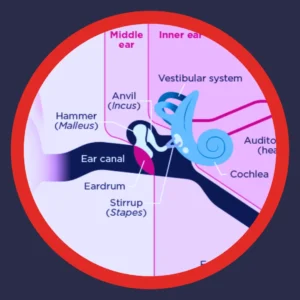
Your eardrum is a thin membrane stretched across the end of the ear canal, and it has one job: catch sound, pass the vibration to the tiny bones behind it. A hole interrupts that handoff. Sound still reaches the ear, and less of it becomes something the inner ear can use.
That single change explains most of what people notice:
- Sound arrives weaker and less clear on the affected side
- Voices lose crispness before they lose volume
- The ear feels open or hollow rather than blocked
- Air and moisture can now reach the middle ear, which is why infection risk goes up
None of that is permanent by default, and the membrane is built to close itself.
The Membrane Repairs Itself More Often Than People Expect
Skin regrows, and the eardrum behaves the same way. That is why watchful waiting is such a common plan rather than a passive one.
Three things shape how the healing goes:
- How large the hole is, and where on the membrane it sits
- Whether an infection is active while it heals
- Whether anything keeps irritating the ear during the window
Your medical provider tracks all three and decides when to intervene.
How People Describe the Moment It Happens
Descriptions of a ruptured eardrum are remarkably consistent, which makes it easy to recognize after the fact. The sequence matters more than any single symptom.
Here is the pattern people report:
| What happens | How it is usually described |
|---|---|
| The rupture | A sharp, sudden pain, sometimes during a flight, a dive, or an infection |
| Right after | Pain eases quickly, which feels like improvement |
| Hearing | Muffled or distant on one side, never both |
| Drainage | Clear, bloody, or pus-like fluid from the canal |
| Sound in the ear | Ringing, buzzing, or a whooshing that was not there before |
Recognizing that sequence is a reason to call a medical provider rather than wait it out at home.

What Causes an Eardrum to Rupture
Causes fall into a short list, and pressure and infection lead it by a wide margin. Federal guidance on hearing loss in older adults names three directly: infection, pressure, and putting objects into the ear, cotton-tipped swabs included.
The usual routes to a hole in the eardrum:
- A middle ear infection that builds pressure until the membrane gives
- Barotrauma from flying, diving, or a fast change in altitude
- A cotton swab, hairpin, or anything else inserted into the canal
- A blow to the ear or a fall onto the side of the head
- A very loud, very sudden blast close to the ear
Only two of those five are anyone’s fault. That is worth saying out loud, because people arrive at appointments embarrassed about the swab.
How Long Does a Ruptured Eardrum Take to Heal?
Most of them close without surgery. Federal rehabilitative auditory research puts it plainly: most eardrums heal on their own, the exceptions being a resulting middle ear infection or a total perforation. What nobody publishes is a reliable number of weeks, so your provider sets your timeline after looking at the hole, because size and location move it more than anything you do at home.
How the healing window usually goes:
- The pain settles first, often within days
- Drainage stops as any infection clears
- The membrane closes gradually, with hearing improving as it does
- A follow-up look confirms the hole is gone
Why the Pain Leaving Is Not the Finish Line
Pain is the least useful signal here, because it drops off early and stays gone while real healing continues underneath. That gap is where people stop paying attention.
Two markers matter more than comfort:
- A provider confirming the membrane has closed
- Hearing measured against a known number rather than a guess
Both come from a visit, not from how the ear feels on a Tuesday morning.
When a Ruptured Eardrum Needs Surgery
A minority of perforations need repair. Surgeons call that procedure tympanoplasty, and success rates run high. Johns Hopkins Medicine puts them at 75 to 90 percent of cases in its patient research. That same source notes something worth knowing going in: full healing of the eardrum can take two months or longer, even after a straightforward recovery.
Repair usually enters the conversation when:
- The hole has not closed after months of watchful waiting
- The perforation is large, or sits where hearing is most affected
- Infections keep returning through the opening
- Hearing has not recovered alongside the membrane
Your treating provider owns that decision, and an ear specialist usually weighs in before anyone schedules anything.
Hearing Loss From a Ruptured Eardrum, and What Kind It Is
A hole in the eardrum causes conductive hearing loss. The hole blocks sound on its way in rather than scrambling it once it arrives, and that distinction is not academic, because the two kinds behave very differently over time. Reading up on conductive vs. sensorineural hearing loss makes the rest of this easier to follow.
| Pattern | What is happening | Typical outlook |
|---|---|---|
| Conductive | Sound blocked by the hole, fluid, or middle ear damage | Usually improves as the ear heals |
| Sensorineural | Inner ear or nerve structures damaged | Usually persists and needs support |
| Mixed | Both are present at once | Depends on the inner ear component |
Only a test sorts a real ear into one of those three rows, and guessing from symptoms is how people end up surprised.
Why Your Ear Can Still Sound Muffled After It Heals
This is the part the internet skips. Every major page ends at “it usually heals.” The person whose eardrum closed six weeks ago, and whose ear still sounds wrapped in a towel, is left with nowhere to go. That experience is common, and it has real explanations.
Several things can leave hearing changed after the membrane closes:
- Scar tissue at the repair site, which is stiffer than the original membrane
- Fluid still sitting behind the eardrum
- Damage to the small bones of the middle ear from the original injury or infection
- An inner ear change that happened at the same time as the rupture
- Age-related hearing loss that was already there and only became obvious once one ear got worse
That last one surprises people most, and it is why the number matters. Persistent muffled hearing after a healed eardrum is a reason to get measured, not a reason to wait longer.
The Hearing Test That Confirms You Recovered
A closed eardrum is something a provider can see. Recovered hearing is something only a test can show, and the two do not always arrive together. That is the case for a hearing check once the ear has settled, and it is the step most people never take.
What that appointment gives you:
- Air and bone conduction thresholds, which separate a conductive problem from an inner ear one
- Middle ear pressure and eardrum movement measurements
- Word recognition scores, in quiet and in noise
- A baseline number to compare against next time
Our team reads those results against your history and what you are struggling to hear, rather than handing you a chart and a handshake. When the numbers say your hearing did not come all the way back, you can find a clinic near you and talk through what comes next. The guide more than a line graph walks through the symbols before you come in. Degrees of hearing loss explains what the numbers mean once you have them.
One Thing Worth Knowing About Timing
Hearing measured while the eardrum is still open is not a baseline. It is a snapshot of an ear with a hole in it: useful for tracking the injury, misleading as a record of your hearing.
The rhythm that works:
- A test once your provider confirms the eardrum has closed
- A comparison test if anything changes afterward
- A regular check from then on, the same as anyone over 50
Guidance on when you get your hearing checked covers the schedule outside of an injury.
What to Avoid While a Ruptured Eardrum Heals
The instinct is to treat the ear, and the better instinct is to leave it alone. An open membrane means the middle ear has lost its cover. Anything entering the canal can now reach places it was never meant to.
Worth avoiding until a provider clears you:
- Water in the ear, including showers without protection and any swimming
- Ear drops of any kind, prescription or over the counter, unless your provider prescribed them for this
- Cotton swabs and anything else inserted into the canal
- Flying and diving, both of which change pressure across the healing membrane
- Blowing your nose hard, which pushes pressure straight up the eustachian tube
If water does get in, our guide on how to get water out covers the gentle approaches, and anything beyond gentle is a call to your provider.
Talk With a Hearing Care Provider Who Listens
Recovering from a ruptured eardrum leaves most people with one unanswered question: did the hearing come all the way back. That is measurable, and it takes one appointment. Our clinics sit across Kansas City, Nebraska, Iowa, Oklahoma, Tennessee, and Arkansas, and every one of them is locally owned.
What our patients count on:
- Brand-neutral advice across Phonak, ReSound, Starkey, Oticon, and Unitron
- Options across price tiers, plus in-network insurance and benefit verification help
- Real ear measurement at many locations
- A 7-day trial before any commitment
- Unlocked hearing aids that stay adjustable wherever life takes you
In your network, in your neighborhood, and in your corner. You can find a clinic near you and start with a free hearing screening.
Your Ruptured Eardrum Questions Answered
Can You Fly With a Perforated Eardrum?
Ask your provider before you book, because the answer depends on whether the hole is still open. Cabin pressure changes push against a healing membrane, and that is exactly the stress it does not need. At American Hearing + Audiology, our providers hear about post-flight ear trouble regularly. It is worth a conversation before a trip rather than after one.
Does a Ruptured Eardrum Cause Ringing in the Ear?
Ringing often shows up alongside a rupture, and it frequently fades as the ear heals. When it outlasts the healing, that is a separate thing worth having looked at. At American Hearing + Audiology, our providers see tinnitus and hearing changes turn up together often enough that we test for both.
Can You Wear a Hearing Aid With a Hole in Your Eardrum?
Not usually while the perforation is open, because a device seated in the canal can trap moisture. Once the eardrum closes and we measure your hearing, a hearing aid becomes a reasonable option if the numbers support it. Our providers fit to verified thresholds rather than to symptoms.
Will a Healed Eardrum Show Up on a Hearing Test Later?
Sometimes, and that is a good reason to have a number on file. Scarring at an old perforation site can leave a small conductive signature that turns up years later, and without a baseline nobody can tell whether it is old or new. At American Hearing + Audiology, our providers compare results against your history so a small change stands out instead of getting explained away. Scheduling a hearing test takes one call.
Can the Same Eardrum Rupture More Than Once?
Yes, and repeat perforations usually point at an underlying pattern rather than bad luck. Recurring middle ear infections and chronic eustachian tube trouble are the common culprits. A provider treating the pattern does more good than treating each rupture as a fresh event.