TL;DR: Eustachian tube dysfunction means the small tube behind your eardrum stops balancing pressure well. Ears feel full, sound turns dull, and popping noises come and go. Most cases settle within weeks, and fullness past three months deserves a hearing check.
That plugged, underwater feeling in one ear wears on you fast. Eustachian tube dysfunction sits behind a lot of those blocked-ear days. Many people notice muffled hearing first, then popping or crackling sounds. Understanding the pattern makes your next step much clearer.
What Eustachian Tube Dysfunction Feels Like Day to Day
Your middle ear needs a steady supply of fresh air. The eustachian tube delivers it from the back of your throat. When that tube swells shut, pressure behind the eardrum drops. Hearing changes along with it. Clinical research puts adult diagnosis near 1% of the population.
Patterns repeat from patient to patient, so this list covers the usual ones.
- Fullness or pressure, usually stronger in one ear
- Sound that turns dull, distant, or slightly hollow
- Popping and crackling when you swallow or yawn
- Ringing that arrives, fades, and returns
- Your own voice sounding oddly loud inside your head
- A heavy, tired ache around the ear
- Brief off-balance moments when you stand up
One symptom can show up alone, and the mix often shifts through the day.
Signs the Pressure Is Not Settling
Short bouts of ear fullness rarely worry us. Repeat bouts tell a different story. So does fullness that outlasts a head cold. Providers watch closely when the eardrum starts pulling inward. Steady negative pressure changes how it moves.
Watch for these shifts in the pattern rather than the pressure itself.
- Fullness returning every allergy season
- Hearing that stays dull after congestion clears
- Ringing that settles in and stays
- Pressure paired with dizziness or nausea
Any of these signs earn a closer look from a hearing care provider.

Why the Eustachian Tube Stops Doing Its Job
Swelling drives most cases. Anything that inflames your nose and throat inflames the tube opening too. That narrow opening closes easily. Pressure changes outside your body create a second route to the same problem.
Several everyday triggers explain the bulk of what we see in clinic.
- Colds and other upper respiratory infections
- Seasonal allergies and nasal swelling
- Sinus congestion lingering after the cough fades
- Fast altitude changes on flights, in elevators, or on mountain roads
- Acid reflux irritating tissue near the tube opening
- Enlarged tissue at the back of the nose
- Smoke exposure, which irritates the same lining
Each trigger narrows a passage that already measures about a millimeter across.
Children and Ear Pressure
Kids run into this constantly, and anatomy explains why. Their tubes sit shorter and more level than an adult’s, so fluid drains slowly. Federal research on ear infections tracks how common this gets. Five of six children get an ear infection by age three.
Parents usually notice behavior before symptoms, so keep an eye on these clues.
- Turning up the television volume
- Missing quiet requests from another room
- Tugging at one ear during a cold
- Struggling to follow speech in a noisy room
Growth resolves many childhood cases, though repeat fluid still warrants a hearing check.
How Long Eustachian Tube Dysfunction Usually Lasts
Timing matters more than severity here. Most bouts fade as the cold or allergy flare behind them fades. Clinicians split the condition at the three-month mark, which changes how they plan care.
This table sets out the common patterns and what providers track.
|
Pattern |
Typical Timeline |
What Providers Watch For |
|---|---|---|
|
Acute |
Under three months |
Fullness easing as congestion clears |
|
Chronic |
Past three months |
Steady pressure, dull hearing, eardrum retraction |
|
Pressure related |
Hours to days after a flight |
Symptoms fading once pressure evens out |
|
Patulous |
Comes and goes, often with weight loss |
A tube that stays open too much |
Leftover fluid after an ear infection usually clears within three to six weeks.
Timelines That Ask for a Second Look
Six weeks of quiet improvement looks reassuring. Three months of the same muffled ear looks different. That gap is where a hearing check earns its keep. Documentation of the pattern also helps if symptoms return next year.
Keep a simple record so your provider sees the shape of it.
- Which ear feels blocked, and how often
- What preceded the first episode
- Whether hearing dips alongside the pressure
- Which weeks brought relief
Notes like these turn a vague complaint into useful clinical detail.
How Eustachian Tube Dysfunction Affects Your Hearing
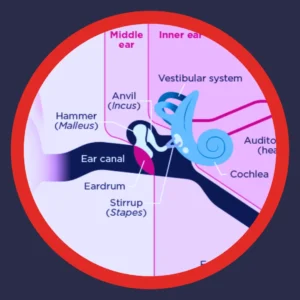
Blocked pressure slows sound before it reaches your inner ear. Your eardrum needs balanced air on both sides to vibrate freely. Negative pressure stiffens that movement. Volume drops as a result, especially for softer, higher sounds.
Sound travels through several structures, and this list follows the chain.
- Air pressure holds the eardrum in its neutral position
- The eardrum vibrates and passes energy to three small bones
- Those bones drive fluid movement in the inner ear
- Hair cells convert that movement into nerve signals
Trouble anywhere along the first three steps softens what you hear.
Temporary Changes Versus Lasting Ones
Most pressure-related hearing changes lift once the tube opens again. Lasting loss involves the inner ear instead, and that distinction shapes treatment completely. Your provider sorts findings into conductive vs. sensorineural hearing loss before recommending anything.
Two paths lead to very different plans, as shown here.
- Conductive changes: something blocks sound on the way in, often reversible
- Sensorineural changes: inner ear or nerve involvement, usually permanent
- Mixed findings: both patterns present in the same ear
Sorting the type early keeps care aimed at the real cause. You can also review hearing loss basics before your visit.
Ear Fullness Look-Alikes Worth Ruling Out
Plenty of conditions create that same blocked sensation. Sorting them apart takes a look inside plus a few measurements. Guessing from symptoms alone leads people down the wrong path for months.
The table below compares the common culprits behind a full-feeling ear.
|
Cause |
How It Often Feels |
Sensible Next Step |
|---|---|---|
|
Earwax buildup |
Gradual blockage, sometimes itchy |
Ask about professional ear wax removal |
|
Eustachian tube dysfunction |
Pressure that pops, shifts, and returns |
Book a hearing check |
|
Middle ear fluid |
Dull hearing after a cold |
A provider views the eardrum |
|
Inner ear conditions |
Fullness plus spinning or nausea |
Read about Meniere’s disease and hearing loss |
|
Rapid one-sided drop |
Hearing fades within hours or days |
Call a provider quickly about sudden hearing loss |
Each row points toward a different plan, which is exactly why testing beats guessing.
Everyday Habits That Help Pressure Even Out
Small movements open the tube for a moment and let air slip through. Swallowing does it, and so does a wide yawn. None of this replaces a proper look inside your ear. Comfort measures still help while you wait.
Patients tell us these gentle habits help during a flare or flight.
- Sip water steadily instead of gulping it
- Chew gum during takeoff and descent
- Yawn on purpose a few times an hour
- Blow your nose gently, one side at a time
- Run a humidifier in dry winter rooms
- Stay upright for a while after big meals
- Rest your head slightly elevated at night
Habits like these ease pressure, and lasting relief still starts with knowing the cause. Ask a hearing care provider about allergy or reflux care.

When to Get Your Ears Checked
Time and pattern drive this decision. A single blocked week after a cold rarely needs an appointment. Ongoing fullness, repeat episodes, or hearing changes shift that math. Eustachian tube dysfunction shares symptoms with conditions we prefer to catch early.
These situations move a hearing check to the top of your list.
- Fullness lasting longer than three or four weeks
- Hearing that stays dull once congestion clears
- Ringing that lingers past the pressure
- Any sudden change in one ear
- Fullness alongside dizziness or balance trouble
- Episodes returning several times a year
- Ear pressure in a child with speech delays
Booking early gives you answers and a plan, which beats waiting it out. Our guide to understanding hearing evaluation services walks through the whole appointment.
What a Hearing Check Looks For
Appointments move faster than most people expect. Testing is painless, and results arrive the same day. Providers build a picture from several quick measurements rather than one number.
Here is the sequence a typical visit follows.
- Questions about symptoms, timing, and health history
- A look inside the canal at the eardrum itself
- Tympanometry, a quick pressure test of eardrum movement
- Tone testing across the pitch range you use daily
- Speech testing at conversational volume
- A plain-language review of the results with you
Together these steps separate a pressure problem from an inner ear one.
Inside the Pressure Test
Tympanometry measures eardrum movement against changing air pressure. A flattened or shifted result points toward negative pressure or fluid behind the eardrum. That single measurement often confirms eustachian tube dysfunction in minutes.
Results usually fall into a few recognizable patterns.
- Normal movement with balanced pressure
- Negative pressure suggesting a blocked tube
- Very limited movement suggesting fluid
- A wide, loose pattern suggesting a thin eardrum
Each pattern guides the conversation that follows the test. When results point to lasting hearing loss, fitting accuracy matters. Scheduling a hearing test is the practical first move. Patients can understand real ear measurement, available at many of our locations.
Ready to Find Out What Is Behind That Full Feeling?
Answers beat guesswork, especially with something as stubborn as ear pressure. Our providers test, explain, and lay out options in plain language. You get time to ask questions. Nobody pushes a device you do not need.
Here is what patients get with American Hearing + Audiology.
- Locally owned clinics, with providers from your own community
- Five premium brands, with brand-neutral recommendations
- Options for every budget, and in-network insurance help
- Our team verifies your benefits, so you skip the paperwork
- Real ear measurement, available at many locations
- A 7-day free trial before you commit
- Remote care for follow-ups and adjustments
- Unlocked hearing aids that stay adjustable anywhere
Every one of those pieces exists to make your decision easier. Ready to hear clearly again? You can find a clinic near you today. Talk with a hearing care provider who listens.
Your Eustachian Tube Dysfunction Questions Answered
Can eustachian tube dysfunction cause permanent hearing loss?
Most pressure-related hearing changes lift once the tube opens again. Long-standing fluid or repeated infections can affect the middle ear over time. At American Hearing + Audiology, our providers measure eardrum movement and hearing together.
Does the full feeling ever clear up on its own?
Yes, quite often. Bouts tied to a cold or a flight usually fade within days or weeks. Fullness past three months counts as chronic, and that timeline calls for testing.
Is eustachian tube dysfunction usually in both ears?
One ear usually feels worse than the other. Both ears can react during a cold or a flight. Our providers test each ear separately, so you see the full picture.
What makes flying so uncomfortable with eustachian tube dysfunction?
Cabin pressure shifts quickly during descent, and a swollen tube cannot keep up. Pressure builds behind the eardrum until the tube opens. Swallowing, yawning, and chewing gum give it repeated chances to equalize.
How do seasonal allergies fit into eustachian tube dysfunction?
Allergies swell the lining of your nose and throat, including the tube opening. Symptoms then follow pollen counts season after season. Bring that pattern to your appointment. When fullness keeps returning, find a clinic near you.