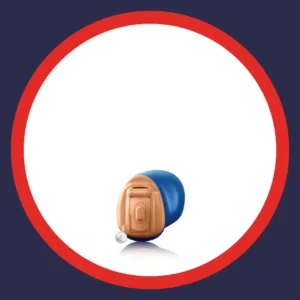
TL;DR: Unitron Smile is the platform behind four current models, two custom in-the-ear and two behind-the-ear. What separates them is battery life and whether they recharge. The Insera S-R is the unusual one, a custom in-the-ear hearing aid you drop on a charger at night.
Most people meet a Unitron Smile hearing aid across a desk, with a provider holding one up and explaining why it suits their ears. This is that conversation, in advance. Every figure below comes from Unitron’s own technical data or its own product pages, and where Unitron publishes nothing, this says so. Comparing hearing aid options is hard enough without anyone filling in the gaps.
What the Unitron Smile Platform Is
Smile is a platform rather than a single device. The four models share their processing and their app, and they differ in shape, power, and how they get their electricity. Unitron builds them, and Sonova owns Unitron.
Four models sit on it today:
- Insera S-R, a custom in-the-ear shell, rechargeable
- Insera S-10 NW O, a custom in-the-ear shell, disposable size 10 battery, non-wireless, with a telecoil
- Moxi S-R, a receiver-in-canal that sits behind the ear, rechargeable
- Moxi S-RX, a receiver-in-canal built for more power, rechargeable
A custom shell starts from an impression of your ear. Behind-the-ear models get fitted to it instead. That single difference drives most of what follows.
Insera S-R: A Custom Hearing Aid That Recharges
Start here, because a rechargeable custom in-the-ear device is still not the norm. Most custom hearing aids take a disposable battery. That means fingernails, blister packs, and a battery door that gets harder to open as hands age. The Insera S-R takes neither.
What Unitron publishes about it:
- Magnetic snap and charge docking, which is Unitron’s own phrasing for the charger
- IP68-rated durability with proven wax protection, per Unitron’s model page
- Expected operating time of 18 hours on every receiver option, from its technical data
- Four receiver options, M, P, SP and UP, covering mild through severe fitting ranges
The wax point matters more than it reads. A custom shell sits deeper in the canal than a behind-the-ear receiver does. Wax is what most often sends a custom device back for repair.
What EarMatch Changes About the Fit
Unitron calls its custom-shell process EarMatch Advantage. It describes that as combining deep-fit modeling, smart vent and receiver selection, and intentional mic placement, to deliver a secure fit the first time and reduce remakes and repeat visits.
Read past the vocabulary and it is a claim about one thing: fewer trips back. That matters, because a remake means going without your hearing aid for a week or two while a new shell gets built.
Moxi S-R and Moxi S-RX: The Behind-the-Ear Options
Both Moxi models are receiver-in-canal: a small housing behind the ear with a thin wire carrying sound into the canal. It is the most commonly fitted of the types of hearing aids, and for good reason. The style handles a wide range of hearing loss, it is easy to manage, and it stays out of the way.
What separates the two is headroom and range:
- Moxi S-R publishes a maximum output of 132 dBSPL on its UP receiver and reaches 10000 Hz on its S and M receivers
- Moxi S-RX publishes the same 132 dBSPL ceiling and is built around more power at the top end
- Both offer four receiver options, S, M, P and UP
- Both list an audio latency of 6.2 ms in their technical data
Which of the two suits you is a fitting-range question, and it gets settled by an audiogram rather than by a preference.
Battery Life, Model by Model
This is the comparison people want, and until recently there was no sourced way to make it. All four figures below come from Unitron’s own technical data sheets, and the operating times are the manufacturer’s expected figures rather than a guarantee.
| Model | Power source | Expected operating time | Note |
|---|---|---|---|
| Moxi S-R | Rechargeable | 20 hours | Longest of the three rechargeables |
| Moxi S-RX | Rechargeable | 18 hours | Same ceiling, more power |
| Insera S-R | Rechargeable | 18 hours | Same figure on all four receivers |
| Insera S-10 NW O | Size 10 battery | 82 hours on M, 75 hours on P | Non-wireless, carries a telecoil |
Unitron notes that operating time depends on active features, wireless accessory use, hearing loss, battery age, and the sound environment. Treat those numbers as a ceiling rather than a promise about your Tuesday. Our rechargeable hearing aids guide covers what shortens a charge in practice.
The last row is the interesting one. A disposable battery buys far more hours per change and costs you the changing.
How Unitron Describes the Sound Processing
Everything in this section is Unitron’s own language about its own platform. That is worth saying plainly, because processing claims are the hardest part of any hearing aid to check independently.
Unitron publishes the following about Smile:
- An AI-trained system it calls Integra OS, which it says detects 8 key listening environments and optimizes automatically as the soundscape changes
- HyperFocus, which it positions for conversation in loud environments, described as improved on the Insera S-R
- Speech Enhancement with Soft Speech, which it says reduces listening effort in low complexity environments, citing published research from 2024
- Log It All, which records how much time you spend in each listening environment, and which Unitron states works regardless of technology level
That last one is the most useful to you and the least marketed. Your provider can see where your week happens rather than asking you to remember it.
Connectivity, and the One Thing It Does Not Do
Three of the four models connect to a phone. The fourth does not, by design rather than by omission. Our guide to Bluetooth hearing aids covers what the connection does and does not do.
What Unitron’s own user guides and pages state:
- Universal Bluetooth connectivity for phones, tablets and more, on the three wireless models
- Bluetooth Core 5.3, dual-mode, with hands-free calling and audio streaming profiles
- Pairing with up to 8 devices, and two active connections at once
- Setup instructions for both iPhone and Android in every user guide
- The Remote Plus app for adjustments, plus provider-side remote fine-tuning
Unitron publishes nothing about Auracast or broadcast audio for Smile. Its user guides stop at hands-free calling and streaming profiles, with no broadcast profile listed. If Auracast matters to you, and in a few years it will, raise it with your provider rather than assuming it.
The Insera S-10 NW O is non-wireless, so none of the connectivity above applies to it.
What Technology Level Means, and Why Nobody Publishes a Chart
Every Unitron Smile model comes at technology levels, written S9 down to S1. The higher the number, the more the device does in difficult listening. Our guide to how to choose a hearing aid technology level covers that decision on its own terms.
The part that is not straightforward:
- Moxi S-R and both Insera models come at five levels, S9 through S1
- Moxi S-RX comes at two, S9 and S7
- Unitron publishes no feature-by-level chart anywhere public
- The comparison lives inside Unitron’s fitting software, which providers use and patients do not see
We could invent a tidy table of which features appear at which level. It would be guesswork dressed as information. Instead your provider pulls the real comparison up in the fitting software during your appointment, with your audiogram beside it. That is where the decision belongs.
How the Fitting Works at Our Clinics
A custom device is only as good as the impression and the verification behind it. That is the part no datasheet covers.
What happens at your appointment:
- A hearing test first, because every model choice above follows from your thresholds
- A conversation about where you struggle, which drives the technology level more than the model choice does
- An ear impression, if a custom shell is the right answer for your ears
- Real ear measurement at many of our locations, so we verify the fit in your ear rather than trusting the software
- Follow-up with the same provider who fitted you
Reading our guide to why hearing aid fitting is a big deal before you come in makes that visit go faster. When you are ready, you can find a clinic near you and book the test that starts all of it.
Talk With a Hearing Care Provider Who Listens
A Unitron Smile device is one of five premium lines we fit, and whether it suits your ears is a question about your hearing rather than about our shelves. Our providers carry Phonak, ReSound, Starkey, Oticon and Unitron hearing aids, so what you get is a comparison rather than a pitch. Every clinic is locally owned, and the provider who tests you handles your follow-up.
What our patients count on:
- Brand-neutral advice across all five lines, with best-if framing rather than a favorite
- Options across price tiers, plus in-network insurance and benefit verification help
- Real ear measurement at many locations for verified fittings
- A 7-day trial before any commitment
- Unlocked hearing aids that stay adjustable wherever life takes you
In your network, in your neighborhood, and in your corner. You can find a clinic near you and start with a free hearing screening.
Your Unitron Smile Questions Answered
Is a Rechargeable Custom Hearing Aid Worth It?
For most people with dexterity concerns, yes, and the Insera S-R exists because that combination was hard to get. Dropping a device on a dock beats opening a battery door with fingernails every few days. At American Hearing + Audiology, our providers raise this early, because it changes which models are even on the table.
How Long Does a Unitron Smile Battery Last on One Charge?
Unitron’s technical data lists 20 hours for the Moxi S-R and 18 hours for both the Moxi S-RX and the Insera S-R. Those are expected figures under favorable conditions. At American Hearing + Audiology, our providers walk through what your own listening week does to those numbers, because streaming changes them.
Does Unitron Work With an iPhone and an Android Phone?
Both, on the three wireless Unitron Smile models. Unitron’s user guides carry separate setup instructions for iPhone and Android, and the hearing aids pair with up to 8 devices while holding two active connections. Our providers set the pairing up with you at the fitting rather than sending you home to work it out.
Can I Upgrade the Technology Level Later?
Unitron publishes a program for exactly that, letting a provider move a client’s existing hearing aids to a higher technology level without new devices. At American Hearing + Audiology, our providers will tell you plainly whether that path exists on the model you are considering. It is worth knowing before you choose rather than after.
Which Unitron Model Is Best?
No Unitron Smile model is best for everyone, and any answer without your audiogram in hand is a sales pitch. Fitting range, dexterity, wax history, how much you stream, and where you struggle all move the answer. Our providers walk through the real comparison with you, which is a shorter conversation than it sounds.