Updated October 2026
TL;DR: A hearing aid fitting is a starting point rather than a finished setting, and the first week is supposed to sound strange. Your provider deliberately starts you below full prescription and walks the volume up across follow-up visits as your brain relearns sound. Book the follow-up before you leave the first appointment, because that visit is where the devices start working for you.
Everything is too loud. Your own chewing sounds like gravel, the turn signal is suddenly enormous, and the one voice you wanted to hear is still hard to catch. If that is your first week, nothing has gone wrong, because a hearing aid fitting starts on a conservative opening setting by design. Knowing why changes what you do next, and if you have not been fitted yet, the first step is scheduling a hearing test.
What Happens at a Hearing Aid Fitting
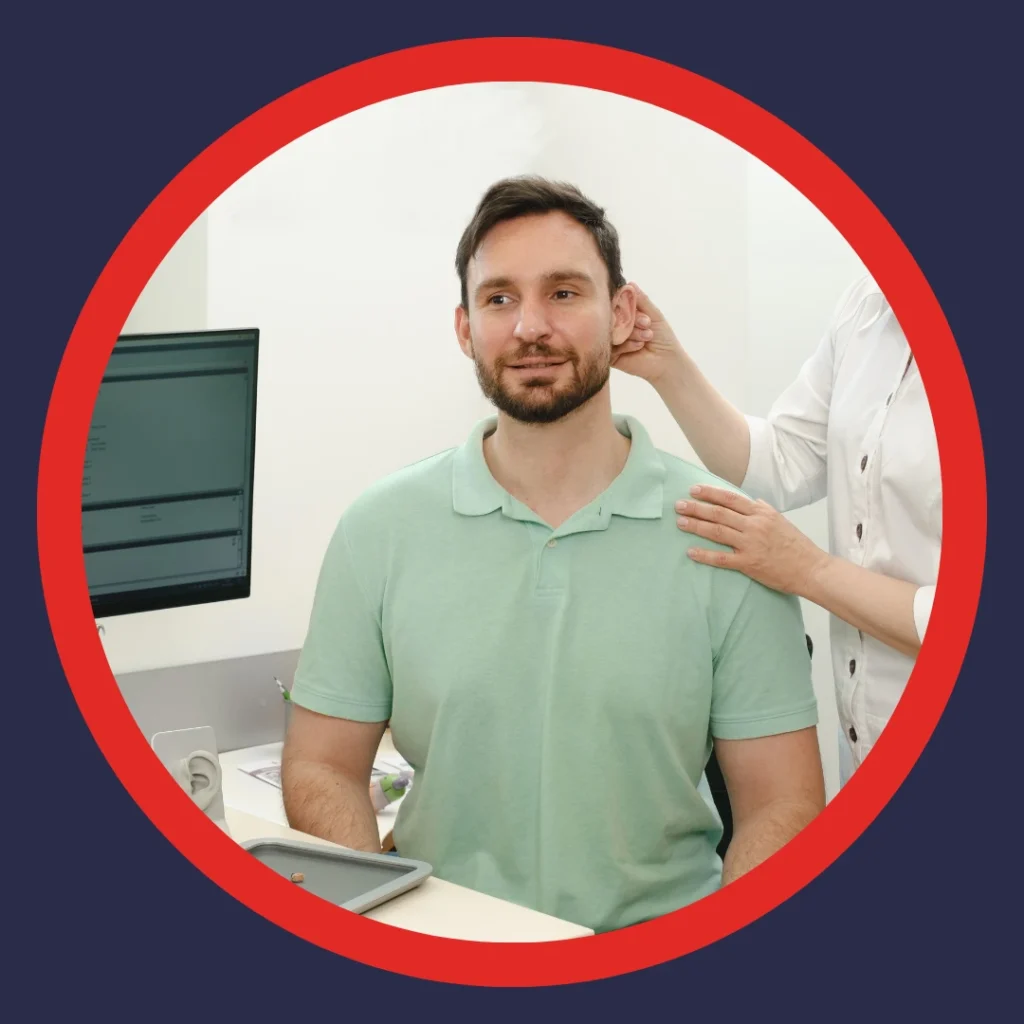
A fitting is a programming appointment rather than a handover, which is why it takes real time and why it is done in person. Your provider loads your audiogram into the manufacturer’s fitting software, which calculates a prescription: how much amplification you need at each pitch, based on your specific hearing loss.
From there the appointment covers five things:
- Physical fit, meaning the dome or custom mold that sits in your ear, checked for seal and for comfort you can tolerate all day rather than for ten minutes.
- Programming to prescription, adjusted by frequency band rather than by one volume dial.
- Verification, so your provider measures the setting rather than assuming it.
- Handling, which means insertion, removal, charging or batteries, and cleaning, practiced on your own devices.
- Expectations, including what the next few weeks will sound like and when to come back.
Miss any one of those and the devices underperform in a way that is easy to blame on the hearing aids. Our guide to hearing tests covers the appointment that comes before this one.
Why the First Week Sounds Wrong
Your provider will usually start you below your full prescription on purpose. It is the most useful thing to understand about a hearing aid fitting, and the part new wearers most often forget once they are home.
Full prescription on day one is unpleasant for someone whose brain has not processed those frequencies in years. High-pitched sounds you stopped hearing gradually, over a decade, all arrive at once, and your brain has no recent practice at sorting them into background and foreground. So the first setting is deliberately gentle, and the plan is to raise it across follow-up visits as your brain relearns what to ignore.
The research bears out how uncomfortable that gap is. In a randomized trial of new adult hearing aid users, 78 percent did not prefer a verified fit that matched prescription more closely at high frequencies, and chose the softer manufacturer setting instead. Comfort on day one and correctness are two different targets, and the appointment is built to move you from the first toward the second over weeks rather than minutes.
Which means the sentence that matters most at your fitting is the one about coming back. A hearing aid fitting without a follow-up is half an appointment.
Nine Things That Go Wrong After a Fitting, and What Fixes Each
Providers hear the same handful of complaints in the first month, and every one of them is adjustable. Find yours in the table below before you decide the devices do not work.
| Your experience | Usual cause | The fix |
|---|---|---|
| Everything is too loud at once | Opening gain set high for a new wearer | A gain adjustment, walked up over visits |
| New sounds feel overwhelming | Normal acclimatization, not a fault | Daily wear plus a scheduled follow-up |
| Background noise swamps speech | One program doing every environment | A dedicated program for noisy rooms |
| Whistling or feedback | The dome or mold is not sealing | A size or style change, plus feedback settings |
| Batteries or charging are fiddly | Device chosen without dexterity in mind | A rechargeable option or a handling lesson |
| Cleaning feels like a chore | Routine never demonstrated on your devices | A hands-on maintenance walkthrough |
| It is not what you expected | Expectations never set at the fitting | An honest conversation about what changes and when |
| The app and controls confuse you | Technology taught once, at the worst moment | A second lesson, unhurried |
| You have stopped mentioning problems | Reluctance to seem difficult | Say it anyway, because none of this is a complaint |
Read that last row twice. Providers cannot adjust what nobody tells them, and the patients who do best are the ones who report the small annoyances early. Our tips for hearing aid success and our hearing aid maintenance guide cover the daily habits that keep most of these from recurring.

What Real Ear Measurement Verifies
Verification answers the one question the software cannot: what the hearing aids deliver inside your ear, rather than what the software predicted before it had ever met your ear. Ear canals differ in length and shape, so two people with identical audiograms and identical devices can receive measurably different sound from the same programming.
Real ear measurement puts a thin probe microphone in the canal alongside the device and measures the output at your eardrum against your prescription target. It turns a fitting from an estimate into a measurement, and it is the difference between a provider believing the aids are right and knowing where they sit. Real ear measurement is available at many of our locations, and it is worth asking about when you book.
What a Hearing Aid Fitting Includes Beyond the Appointment
The fitting is not the product, and most people never think to ask what comes after it before choosing where to buy. What you are buying alongside the devices is access.
Four things come with the devices, and none of them appear on a spec sheet:
- Follow-up visits, where the programming gets walked toward your prescription over weeks.
- Handling and cleaning instruction, repeated as many times as you need it rather than once.
- Fit adjustments, for the week a dome that felt fine stops being comfortable.
- A provider who still has your file next year, when your hearing or your life changes.
Our concierge service plan exists for exactly that ongoing relationship.
Ask any clinic what happens after the fitting before you commit. The answer tells you more about the next three years than any spec sheet will. If you are still deciding, our guide to choosing hearing aids walks through what else to weigh, and hearing aid accessories covers what you may want alongside them.
You Are Not the Only One in the Adjustment Phase
About 28.8 million U.S. adults could benefit from using hearing aids, according to NIDCD research, and every one of them who gets fitted goes through the same strange first few weeks. What separates the people still wearing their devices a year later is rarely better hearing or better technology. It is that they went back and said what was wrong, early, while it was still a small adjustment rather than a decision to quit.
Come Back, and Keep Coming Back
Hearing better starts with one conversation. Locally owned and operated, we carry five premium brands, Phonak, ReSound, Starkey, Oticon, and Unitron, so the fitting starts with your hearing rather than with the one product on the shelf. Recommendations stay brand-neutral, with options across price tiers from entry level through premium. In network with many major plans, we can check your benefits before you decide anything. Real ear measurement is available at many locations, our hearing aids are unlocked, and a 7-day trial lets you hear the difference before you commit. Talk with a hearing care provider who listens: find a clinic near you and start with a free hearing screening.

Common Questions About a Hearing Aid Fitting
How long does a hearing aid fitting take?
Plan on a full appointment rather than a quick collection, because programming, verification and handling instruction all happen in the same visit. Rushing any of the three is what produces a device that never quite settles. At American Hearing + Audiology, our providers build in time for questions rather than booking you to the minute.
Will I need more than one follow-up visit?
More than one, and the number depends on your hearing loss and how quickly you adapt. Anyone who promises a single visit and no adjustments is describing a sale rather than a fitting. Our providers at American Hearing + Audiology schedule the first follow-up before you leave, so it sits on the calendar rather than on a list of good intentions.
Can I get hearing aids programmed if I bought them elsewhere?
We adjust and refit hearing aids purchased from us, so devices bought somewhere else go back to the provider who fitted them, since that practice holds the programming session and the warranty relationship. If that has broken down, a free hearing screening here is still a useful place to start. Find a clinic near you and bring whatever paperwork you have.
Should I wear them all day from the first day?
Build up rather than starting at twelve hours, because your brain tires from the effort of processing sound it has not handled in years. A few hours a day at first, in quieter rooms, then longer and in harder environments as it gets easier. Our providers at American Hearing + Audiology set that schedule with you rather than leaving you to guess at it.
What should I bring to a hearing aid fitting?
Bring a list of the specific situations where you struggle most, since “restaurants” and “one grandchild at the far end of the table” lead to different programming. Take your phone along if you want streaming set up, and bring someone whose voice you hear often. At American Hearing + Audiology, our providers would rather work from your real week than from a general description.