Updated September 2026
TL;DR: Phonak Audéo EON replaces the Audéo Infinio generation with two families that solve different problems. EON Sphere runs two chips and targets speech in noisy rooms, while EON R runs one chip and carries the same connectivity for people whose hard days are quieter. Both are rechargeable, both are rated IP68, and both are built for Auracast broadcast audio.
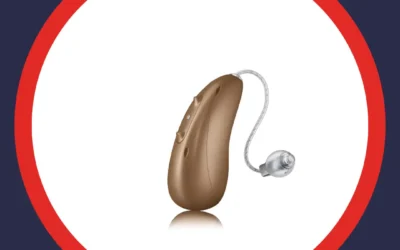
Phonak Audéo EON is the platform that replaces Audéo Infinio, and the change runs deeper than the name on the box. Two families sit under it now instead of one lineup, and they are aimed at different listening lives. One is built for the person who loses the thread halfway through dinner. The other is built for the person who wants the connectivity and the battery without paying for a second processor.
What Phonak Audéo EON Replaces
If you were fitted in the last three years, the device in your ear is probably one of the generations EON now sits above. Here is what moved:
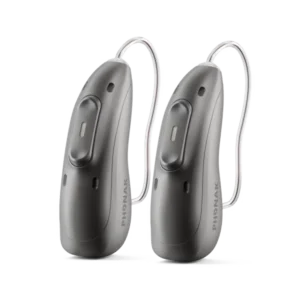
- Audéo Sphere Infinio becomes Audéo EON Sphere.
- Audéo R Infinio becomes Audéo EON R.
- Audéo Lumity, the generation before Infinio, sits two steps back now.
None of that makes a working hearing aid stop working. It does mean the newest processing, the newest version of AutoSense, and Auracast readiness live on the EON platform rather than on the one you were fitted with.
Worth saying plainly: a platform change is not a recall and it is not a deadline. Infinio and Lumity devices keep working, keep receiving service, and keep being programmed by the same software. What stops is forward movement. New features land on the new platform, and the older one holds where it is.
The upgrade question matters more than the naming, because most people wait far too long to ask it. Fewer than 1 in 3 adults aged 70 and older who could benefit from hearing aids has ever used them, according to NIDCD research. The gap between what the technology can do and what people are wearing is wide. A platform change is a reasonable moment to close it.
The Two Families Under Phonak Audéo EON
Phonak split the platform rather than stacking one ladder, so the first decision is family, not tier. This table sets the two side by side.
| Feature | Audéo EON Sphere | Audéo EON R |
|---|---|---|
| Processing | ERA plus HYPERSONIC, two chips | ERA, one chip |
| Built mainly for | Speech in noisy rooms | Everyday listening and connectivity |
| Auracast broadcast audio | ✓ | ✓ |
| IP68 rating | ✓ | ✓ |
| Rechargeable | ✓ | ✓ |
| Fine-tuning channels | 20 | 20 |
| Fitting range | Mild to severe | Mild to severe |
| CROS option | Not offered | ✓ at the 90 tier |
Read the bottom row carefully if you hear well on one side only, because that single line decides the family for you.
EON Sphere: The Second Chip Does One Job
The Sphere family carries two processors instead of one. ERA handles the sound processing and every connection, and HYPERSONIC sits alongside it running real-time AI on the incoming sound. That second chip exists for one situation, the one people describe when they say they can hear fine at home and not at all in a restaurant. Spheric Speech Clarity 3.0 and AutoSense OS AI 8.0 both run on this family.
What that buys you, in plain terms:
- Dedicated processing aimed at separating a voice from the room around it.
- Automatic program changes as you move between quiet, noise, music, and the car.
- Directional microphones that work automatically and can also be set by hand.
- Roughly 38 hours on a charge at both tiers we fit.
If restaurants, meetings, and family gatherings are where your hearing falls apart, this is the family worth trialing first.
EON R: One Chip, the Same Connections
The R family runs the ERA chip on its own. Connectivity does not change, and neither does the build. What changes is that no dedicated AI chip is working on the noise problem. For someone whose difficult moments happen at home, on the phone, or in the car rather than in a crowded room, that is the right trade.
The R family also carries the one option Sphere does not, and it is a significant one. A CROS device pairs with the EON R 90, which routes sound from an ear that cannot be aided over to the ear that can. For anyone with single-sided hearing, that changes what is possible, and it is worth reading what a CROS hearing aid does before you decide.
How the 90 and 70 Tiers Compare
We fit the 90 and 70 tiers of both EON families. The table below is what separates them, with one honest blank where the manufacturer has not published a figure.
| Model | Chips | Battery per charge | CROS pairing | Tinnitus support |
|---|---|---|---|---|
| EON Sphere 90 | ERA plus HYPERSONIC | 38 hours | No | Not listed |
| EON Sphere 70 | ERA plus HYPERSONIC | 38 hours | No | ✓ |
| EON R 90 | ERA | No published figure | ✓ | ✓ |
| EON R 70 | ERA | 38 hours | No | ✓ |
Tier differences within a family are about how much of the processing is switched on, not about a different device, so the honest way to choose is by listening environment rather than by number.
That distinction is worth spelling out, because tier is where most people overspend or come up short. The 90 and the 70 in the same family share a chip, a shell, a battery and a fitting range. What separates them is how many of the automatic programs and how much of the noise processing the fitting software can switch on. Someone who spends most of the week in quiet rooms rarely hears the difference. Someone who eats out three times a week usually does, and hears it immediately.
What Every Phonak Audéo EON Model Carries
Some things do not vary across the four models we fit, and those are usually the features people notice day to day.
- Auracast broadcast audio. Airports, theaters, and places of worship are beginning to broadcast sound directly to hearing devices, and this platform is built to receive it. Our guide to understanding Auracast covers where that stands today.
- Two-way Bluetooth with hands-free calling. Your voice goes out through the hearing aids, so a phone call does not require the phone at your ear.
- Two simultaneous connections. A phone and a laptop can both stay paired.
- IP68 water and dust resistance. Rain and sweat are not the problem they once were.
- Tap control and the My Phonak app. Adjustments happen on the device or on your phone.
- Rechargeable batteries with a portable charging case. No disposable batteries at any tier we carry.
Every one of those is standard rather than an upgrade, which is a real change from how these lineups were built a few generations ago.
Should You Move to Phonak Audéo EON?
A new platform is not a reason on its own. These are, and they are the ones our providers hear most often.

- You are losing conversations in noise. The Sphere family exists for this, and it is the clearest reason to trial one. Our piece on hearing aids and speech in noise explains what the technology can and cannot do.
- You hear from one side only. The CROS option on EON R 90 is worth an appointment by itself.
- Your current aids are five years old or more. Processing, battery chemistry, and connectivity have all moved.
- You are still swapping batteries. Every EON model we fit is rechargeable.
- Venue audio matters to you. Auracast is arriving, and older platforms will not receive it.
If none of those describe your week, keeping what you have is a perfectly sound answer, and any of our providers will tell you so.
Choosing Phonak Audéo EON with American Hearing + Audiology
Choosing between two families and two tiers is not something to do from a spec table, and it is not something you should have to do alone. Our providers carry five premium brands and recommend across all of them, so a Phonak recommendation is a fitting decision rather than a catalog decision. Options run from entry level through premium flagship, and using your insurance is often part of the answer, because we are in network with many major plans.
A few things worth knowing before you book:
- A 7-day trial lets you hear the difference before you commit.
- We can check your benefits before you decide anything.
- Real ear measurement is available at many locations, so the fitting is verified in your ear rather than estimated.
- Hearing aids fitted with us are unlocked, which means they can be serviced elsewhere if you move.
- Locally owned and operated is not a slogan here, and meet our team shows you who you will sit with.
Hearing better starts with one conversation. Book a free hearing screening and find a clinic near you.
Phonak Audéo EON Questions, Answered
Is Phonak Audéo EON better than Audéo Infinio?
EON is the newer platform and it carries newer processing, the current version of AutoSense, and Auracast readiness across every model. Better for you depends on your hearing and where you struggle to use it. Our providers at American Hearing + Audiology answer that with a screening and a fitting comparison rather than a spec sheet.
What is the difference between EON Sphere and EON R?
Sphere runs two chips, ERA plus HYPERSONIC, with the second one dedicated to real-time processing aimed at speech in noise. EON R runs ERA alone and carries the same connectivity, the same IP68 build, and the same 20 fine-tuning channels. EON R is also the only family with a CROS option, offered at the 90 tier.
Do Phonak Audéo EON hearing aids work with Auracast?
Yes. Every EON model is built for Auracast broadcast audio, which is the technology that lets a venue send sound straight to your hearing aids instead of through a loop system. Auracast availability depends on the venue rather than on the hearing aid, so coverage is still growing.
Which Phonak Audéo EON tiers does American Hearing + Audiology fit?
We fit the 90 and 70 tiers of both EON families. Lower tiers exist in the wider Phonak range. Carrying the top two is a deliberate choice, because most patients turn out to need that processing headroom.
Can I try Phonak Audéo EON before buying?
Yes. A 7-day trial lets you hear the difference before you commit, and it applies to every brand and model we carry. If the hearing aids are not right for you, bring them back within the trial and your provider will talk through your options.
Talk with a hearing care provider who listens, and find a clinic near you.