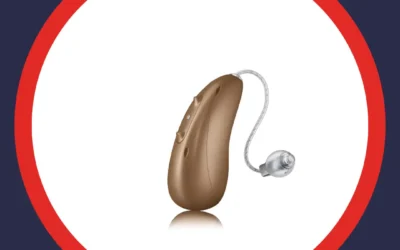
TL;DR: ReSound vs Starkey hearing aids is a choice between two different priorities. ReSound builds toward separating a voice from a noisy room, and Starkey builds toward AI processing paired with health and wellness tracking on the wrist-free device in your ear. Both fit the same hearing losses, so the deciding factor is usually your listening life and your benefit, which a provider settles with you in one appointment.
Anyone comparing ReSound vs Starkey hearing aids has usually already read two manufacturer pages that both sound convincing. Both brands make excellent devices, both cover mild through profound loss, and neither is the right answer for everyone. What separates them is what each company optimized for, and that difference shows up in specific rooms rather than on a spec sheet. Here is how the two compare, and what still has to happen in a clinic before the comparison means anything for you.
What ReSound Is Built to Do
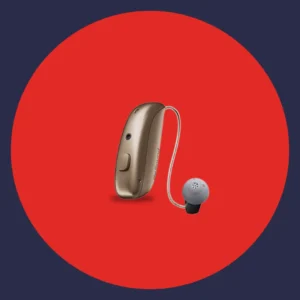
ReSound designs around one problem first: following a single voice while a room works against it. Its processing chain reflects that. The aid classifies the environment, narrows its microphones toward the person in front of you, then reduces the noise that is left over, in that order.
Three current ReSound lines sit on that approach:
- Sensia, the newest, built around Intelligent All-Around, which pairs the classifier and beamformer with deep neural network denoising. ReSound reports 80 percent of users get the best audibility of the person they are trying to hear
- Vivia, the line that introduced the first Auracast Assistant inside a hearing aid app, and still a strong speech-in-noise performer
- Nexia, the smallest of the three, carrying the M&RIE receiver that places a third microphone inside the ear canal
For severe to profound loss, ReSound Enzo IA is the super power line, with up to 28 hours of use and Bluetooth LE Audio with Auracast. All of these come in technology levels, and the level that suits you is a separate question from the brand. There are five reasons ReSound comes up in a fitting room, and noise is the first of them. We carry Sensia at levels 9 and 7, and a provider will tell you which level your hearing test and your benefit will support.
What Starkey Is Built to Do
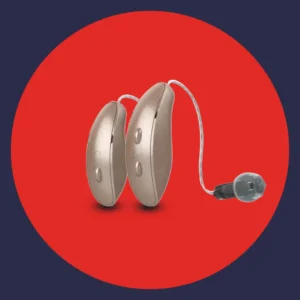
Starkey built toward a different idea: the hearing aid as a health device that happens to also treat hearing loss. Its Genesis AI and Edge AI platforms put AI sound processing alongside health and wellness features, on the reasoning that the ear is a steady place to measure from and the device is already being worn all day.
What that looks like in practice:
- Wellness tracking built into the aid itself, covering physical activity and social engagement rather than only sound
- Fall detection and alerts, which matter to a specific group of wearers and are irrelevant to everyone else
- Custom in-the-ear styles, an area where Starkey has long been strong for people who will not wear anything behind the ear
- Evolv AI, the earlier platform, still in service for many current wearers
Starkey’s own framing is that the device should do more than amplify. Whether that is worth paying attention to depends entirely on whether you would use the extra functions, which is a question about your week rather than about the hardware.
ReSound vs Starkey Hearing Aids at a Glance
Neither column below is a verdict. They are different bets, and the table is here so you can see which bet matches your own week.
| ReSound | Starkey | |
|---|---|---|
| Optimized for | Separating speech from a noisy room | AI processing plus health and wellness tracking |
| Signature idea | Classify, beamform, then denoise | The hearing aid as a health device |
| Current lines we fit | Sensia, Vivia, Nexia | Genesis AI, Edge AI, Evolv AI |
| Standout receiver | M&RIE, with a third microphone in the canal | Custom in-the-ear builds |
| Severe to profound | Enzo IA super power line | Power builds across the current platforms |
| Wellness features | Not the focus | Activity, engagement and fall detection |
| Best if you | Struggle most in restaurants and groups | Want health tracking in the same device |
One row deserves a caveat. “Best if you” is the shorthand, not the rule. Plenty of people who struggle in restaurants end up in a Starkey because of ear anatomy or a custom fit, and plenty of people who like the wellness idea end up in a ReSound because the noise performance mattered more once they tried both.
Where the Two Brands Diverge in Real Rooms
Comparing ReSound vs Starkey hearing aids on paper overstates the gap. It is smaller than either manufacturer suggests, and it opens in specific places rather than across the board.
In a loud restaurant, ReSound’s ordering pays off, because the classifier decides what kind of room it is before the beamformer commits to a direction. In a quiet living room, that advantage mostly disappears and the two are hard to tell apart. On a long walk or during a workout, Starkey’s tracking becomes the only difference either brand offers that the other does not.
That is why comparing on paper stalls out. Two aids can carry near-identical specifications and feel completely different in the one room you care about, and the only way to find out is to wear them where the problem happens. Our 7-day trial exists for exactly that, and a provider can set up the comparison with the same prescription in both so you are testing the brands rather than two different fittings. Ongoing hearing aid care continues after you choose.
Tinnitus and Severe Loss: Both Brands Answer
On tinnitus, ReSound vs Starkey hearing aids is close to a tie. Neither brand is a tinnitus cure, and anyone who tells you otherwise has told you something useful about themselves. What both do offer is sound therapy built into the aid, generating a customizable sound that sits underneath the ringing so your attention has somewhere else to go.
- ReSound builds a tinnitus sound generator into its current lines, adjustable through the Smart 3D app
- Starkey offers comparable tinnitus technology across its current platforms, adjustable in its own app
- Both require a provider to set the therapy level, because a generator set wrong is worse than none
For severe and profound loss, both brands make power devices, and the deciding factor is rarely the badge. It is your fitting range, your speech discrimination score, and whether you need a custom earmold. If that is your situation, hearing aids for severe loss covers the ground in more detail, and your test results will narrow it further than any article can. More background on types of tinnitus is worth reading before an appointment if ringing is your main complaint.
How the Choice Gets Settled in a Fitting Room
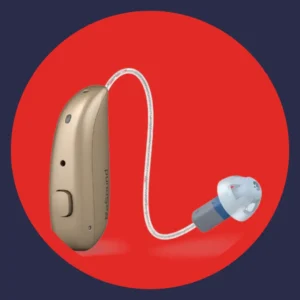
ReSound vs Starkey hearing aids is settled in a fitting room, not on a comparison page. Here is the part neither manufacturer can do for you, and the reason both of their pages feel unresolved when you finish them.
Your hearing test produces a prescription: a target amount of gain at each frequency, specific to your loss. That target is the same whichever brand you choose. What differs is how each manufacturer’s software shapes toward it, how many fine-tuning channels the technology level gives your provider, and how the aid behaves when a room changes. At many of our locations, a provider then runs real ear measurement, placing a thin probe microphone in your canal to measure what the aid delivers at your eardrum rather than trusting the software’s prediction. A ReSound fitted to verified targets outperforms a Starkey fitted by prediction, and the reverse is equally true.
| What the brand decides | What the fitting decides |
|---|---|
| The processing philosophy and feature set | Whether you hit your prescription targets |
| The app, the accessories, the wellness tools | How the aid behaves in your specific rooms |
| The style and receiver options available | Whether the physical fit holds all day |
| Which platform your provider programs on | Whether you keep wearing them at month three |
That second column is where hearing aids succeed or fail. Fewer than 1 in 3 adults aged 70 and older who could benefit from hearing aids has ever used them, according to NIDCD statistics, and abandonment after purchase is a large part of that story. Brand choice is not what usually fixes it.
Choosing Between ReSound and Starkey With a Provider
Weighing ReSound vs Starkey hearing aids is easier with someone who sells both. American Hearing + Audiology is locally owned and operated, and we fit five premium brands including these two, so we have no reason to steer you toward one. A single-brand seller has one answer available. We have a reason to find the right one, and options across price tiers to do it with.
Benefit verification comes first here, before you commit to anything, and we are in network with many major plans, which often narrows the brand question on its own, since a benefit administrator may cover particular devices at particular technology levels. Real ear measurement is available at many of our locations. Every aid we fit is unlocked, so it stays serviceable. A 7-day trial lets you hear the difference before you commit, and comparing our full hearing aid range first will make that appointment shorter.
Talk with a hearing care provider who listens. Find a clinic near you and start with a free hearing screening.
ReSound vs Starkey Hearing Aids: Common Questions
Is ReSound or Starkey Better for Hearing in Noise?
ReSound optimizes for it more directly, ordering its processing so the room is classified before the microphones narrow. Starkey’s current platforms handle noise well too, and the practical gap is smaller than the marketing. At American Hearing + Audiology, our providers will usually have you trial the one that matches your hardest room rather than settle it on specifications.
Do Both Brands Work With Auracast?
ReSound’s current lines carry Bluetooth LE Audio with Auracast, and Vivia added the Auracast Assistant inside its app for finding and joining a broadcast. Auracast support on Starkey depends on the specific platform and model, so check the exact device rather than the brand. Our guide to hearing aids with Bluetooth explains what pairs with what.
Can I Try Both Brands Before Deciding?
Yes, and it is the most useful thing you can do. At American Hearing + Audiology, a 7-day trial covers the aids and the charger and is refundable on return, so comparing two brands in your own rooms costs you time rather than money. Ask your provider to program both toward the same verified targets, otherwise you are comparing fittings instead of brands.
Does My Insurance Benefit Limit Which Brand I Can Get?
Sometimes, and it is worth finding out early. Most plans contract a third party administrator who decides which devices are in the benefit and at which technology levels, so the brand shortlist can narrow before you ever sit in a fitting room. We accept every hearing benefit network and can also take an HSA or FSA card, and our page on hearing aid insurance benefits walks through how that layer works.
Which Brand Is Better for Custom In-the-Ear Styles?
Starkey has a long track record in custom builds, which matters if you will not wear anything behind the ear or if your work makes a behind-the-ear style impractical. ReSound offers custom styles as well. At American Hearing + Audiology, our providers take ear impressions for both, and canal shape sometimes rules out an option regardless of which brand you preferred going in.